
Fixing a problem is easy. Fixing it so it never comes back is harder, and that is what a root cause analysis (RCA) is for. Instead of treating the symptom, such as a late shipment, a machine fault or a customer complaint, you work backward until you find the underlying reason it happened.
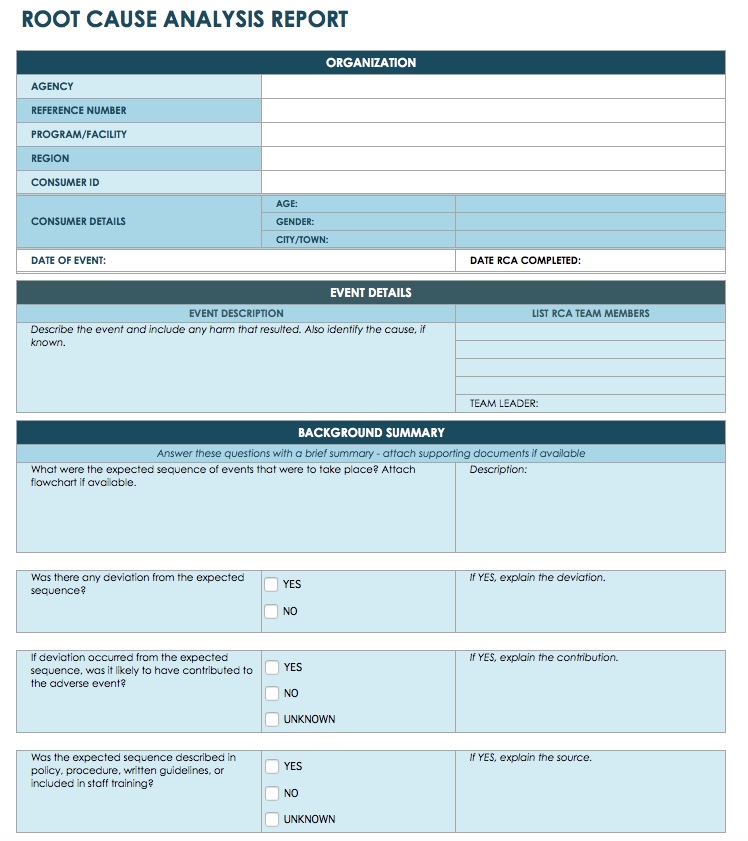
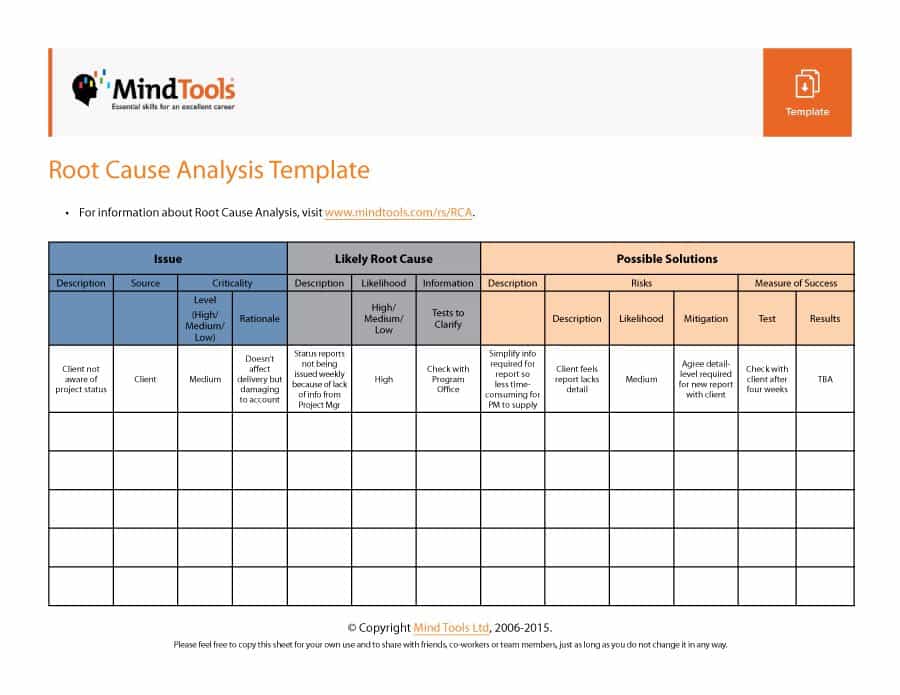
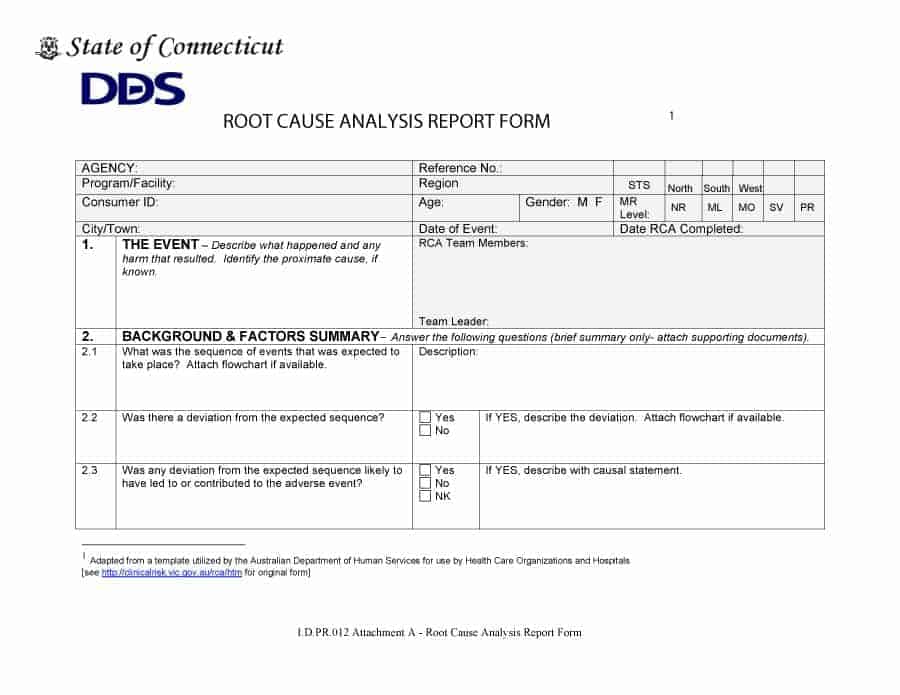
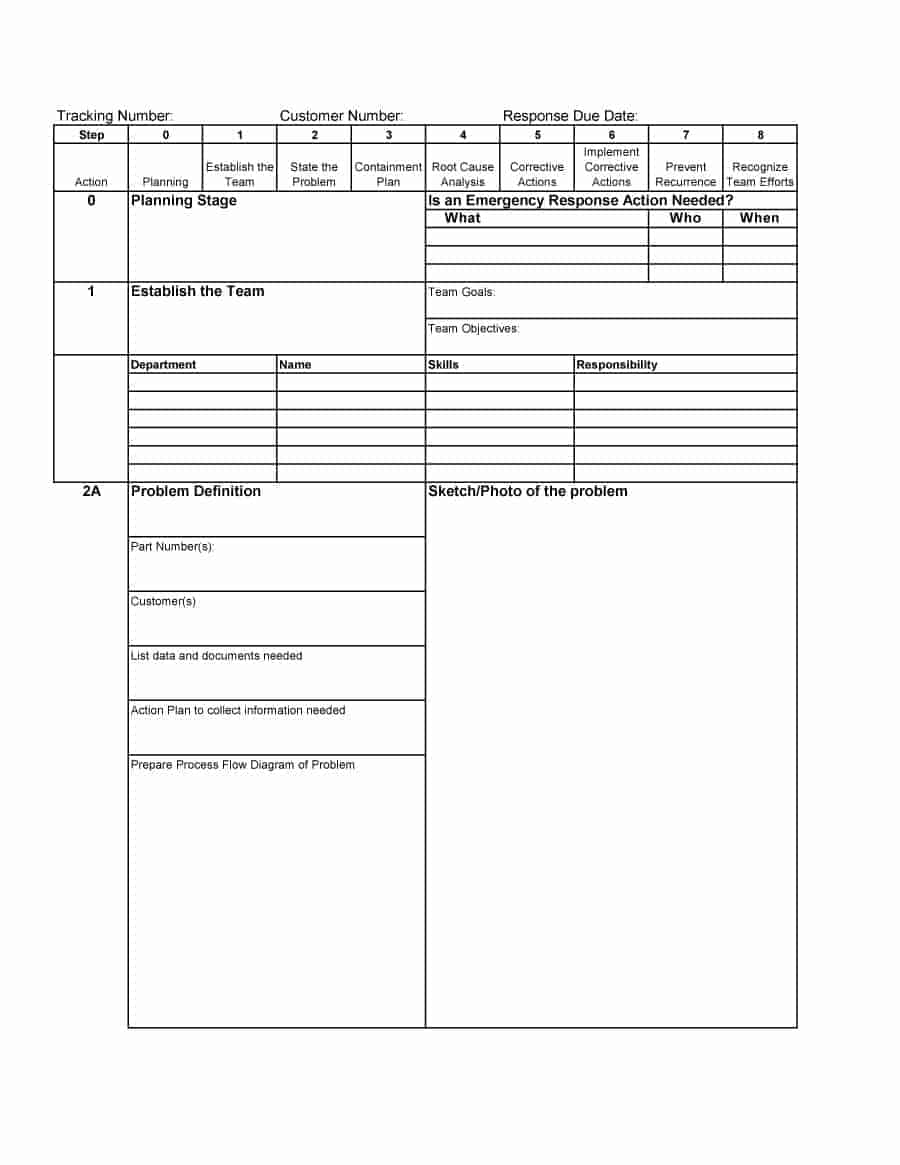
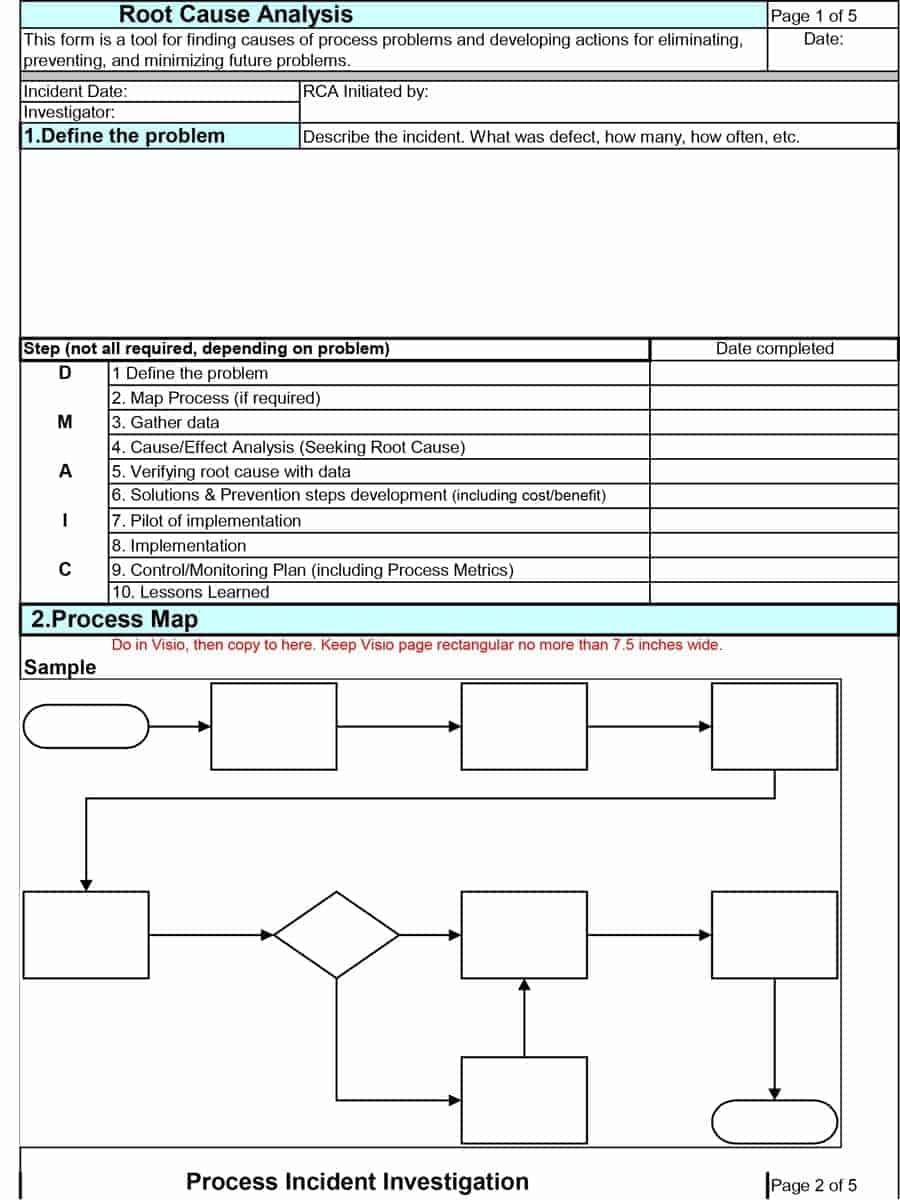
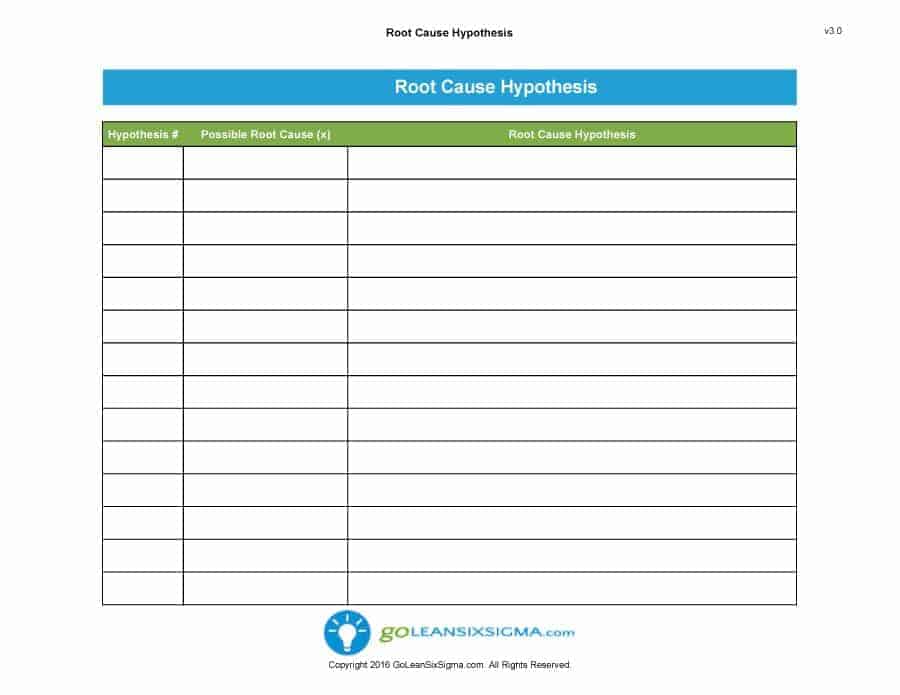
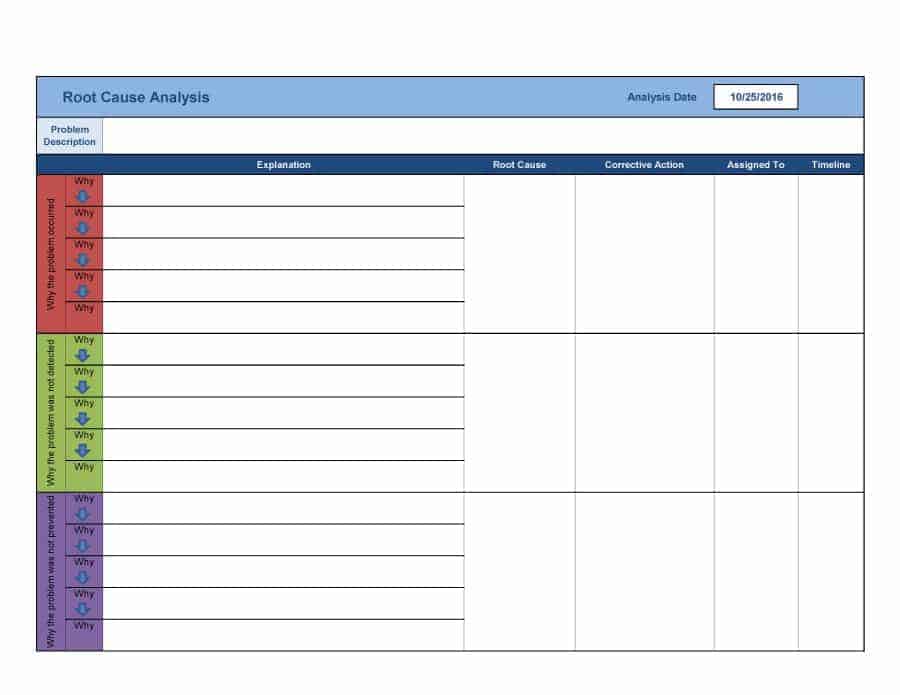
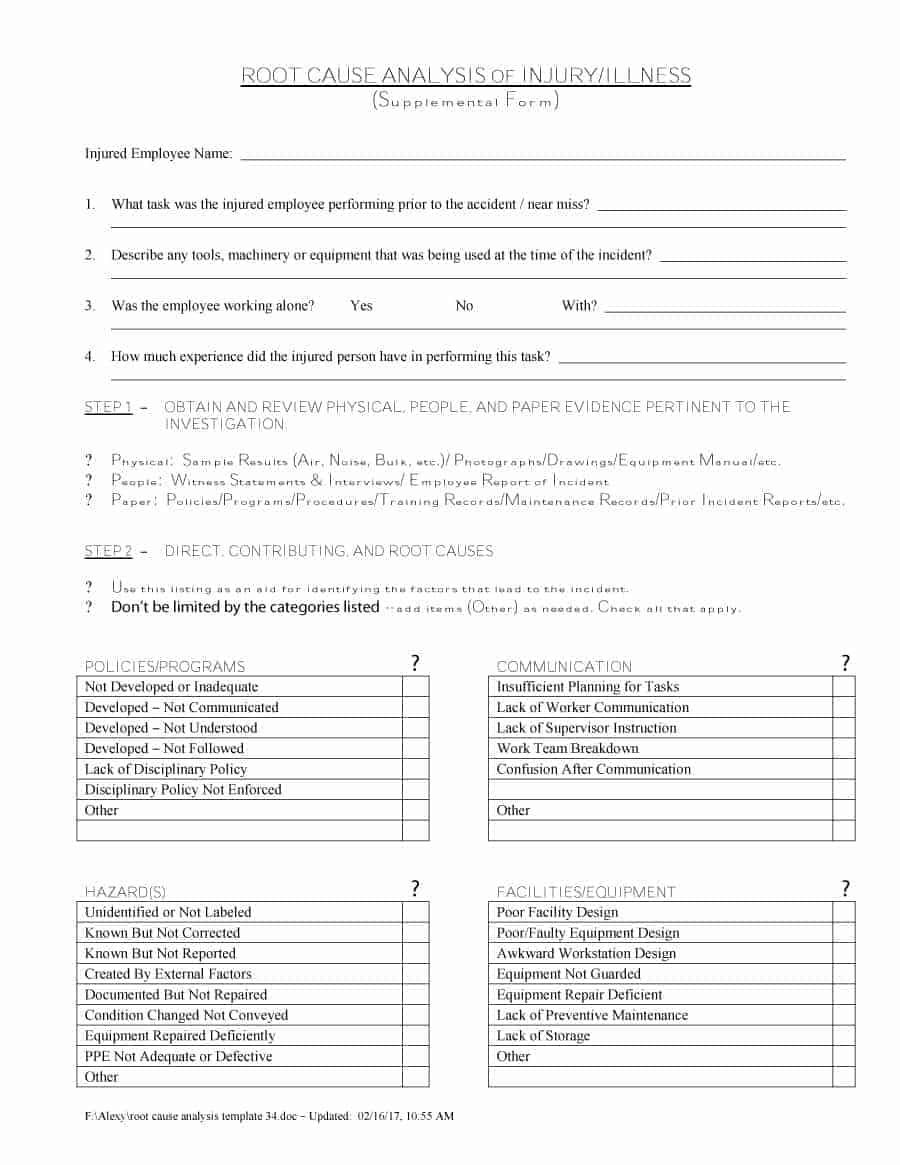
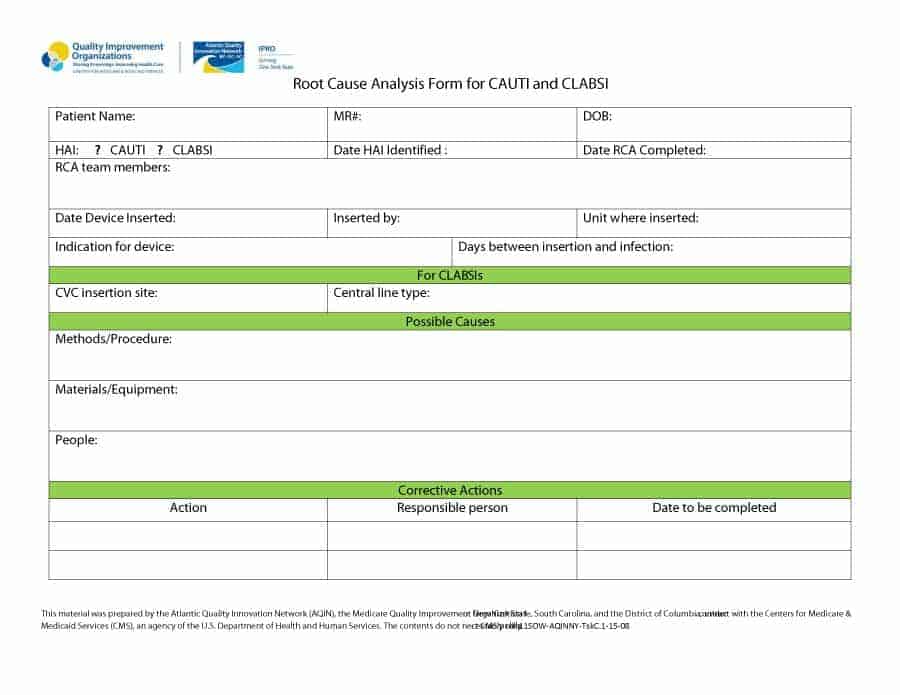
The 13+ root cause analysis templates on this page give your team a structured way to do that. You will find RCA report formats, Excel worksheets for tracking causes and actions, and printable PDF forms for incidents and quality issues.
Which RCA Method Should You Use?
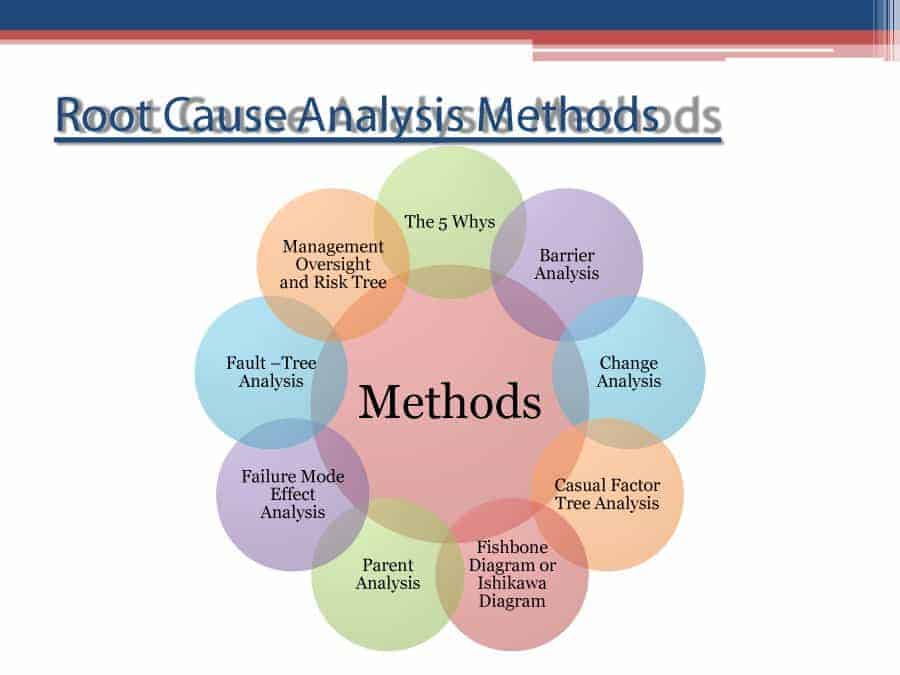
Most templates are built around one of a handful of well-known techniques. Choose the one that suits the size of the problem:
| Method | Best for | How it works |
|---|---|---|
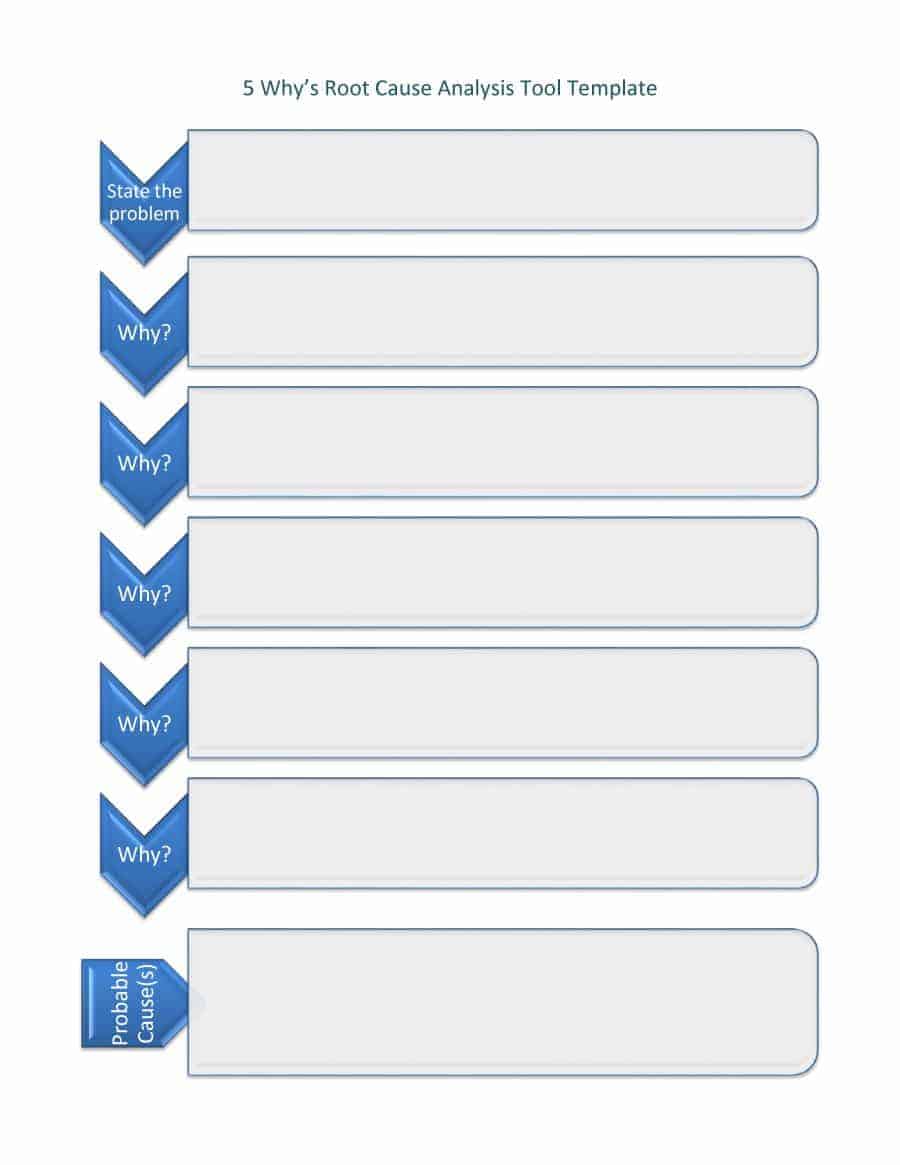
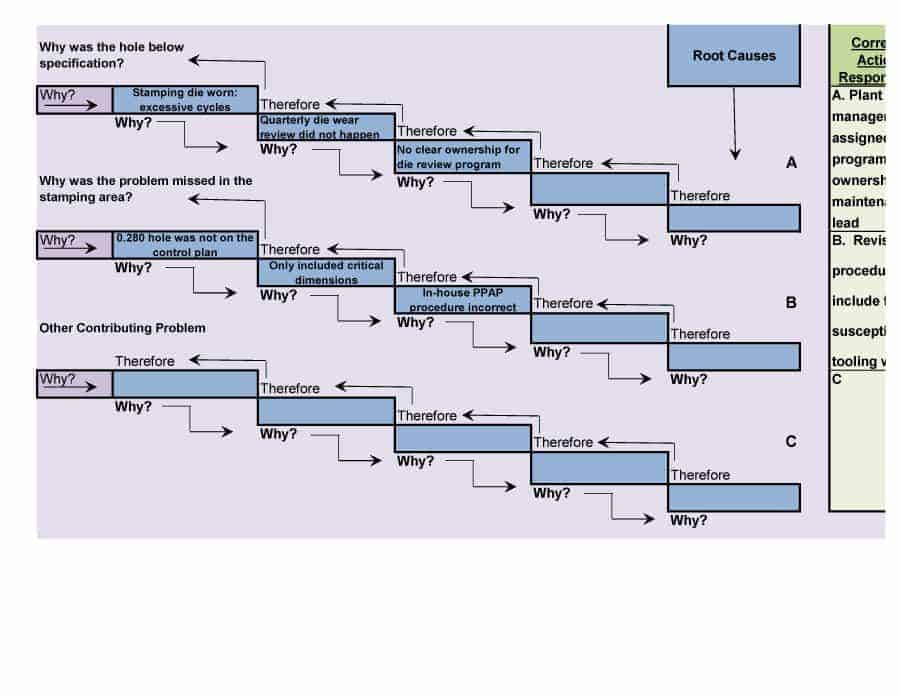
| 5 Whys | Simple, single-cause problems | Ask “why?” repeatedly until you reach a cause you can act on |
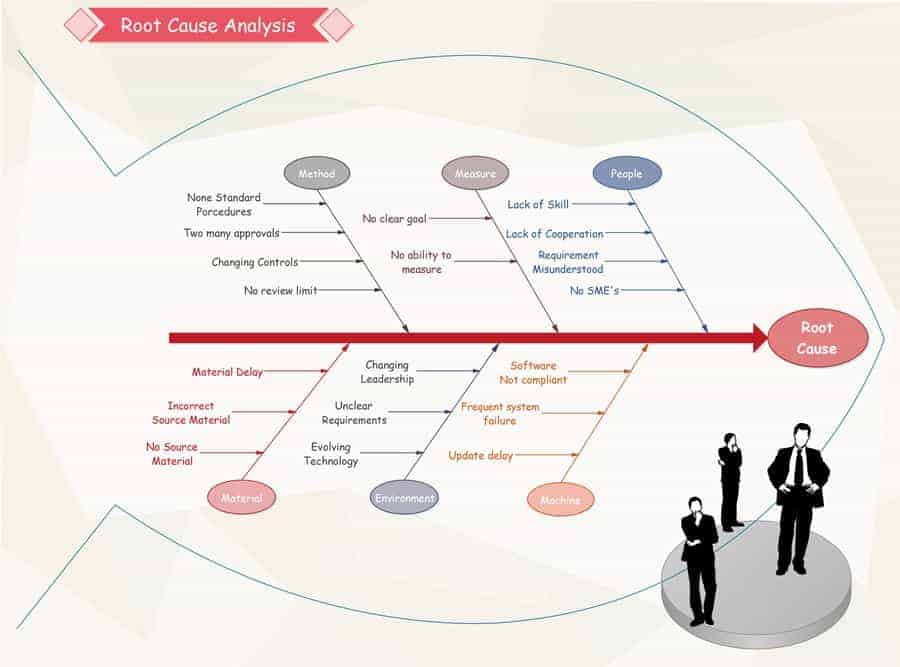
| Fishbone (Ishikawa) diagram | Problems with many possible causes | Group causes under headings such as People, Methods, Machines and Materials |
| Pareto analysis | Recurring issues with lots of data | Rank causes by frequency to find the few that create most problems |
| Fault tree analysis | Safety and engineering failures | Map how combinations of events lead to a failure |
| Change analysis | Problems that started suddenly | Compare what changed between “working” and “not working” |
For Pareto work, a ready-made bar chart saves time; our Excel chart templates include layouts you can adapt.
Root Cause Analysis Templates to Download

A Quick 5 Whys Example
Problem: orders shipped late three times this month.
- Why were they late? The packing team started late.
- Why did packing start late? Pick lists arrived after the shift began.
- Why were pick lists late? The overnight order report failed to run.
- Why did the report fail? A software update changed a file path.
- Why wasn’t that caught? There is no check after updates. This is the root cause.
The fix is not “pack faster.” It is adding a post-update check, which you can record as a corrective action in your action plan template.
Mistakes That Weaken an RCA
- Stopping at “human error.” Ask why the error was possible in the first place.
- Blaming individuals. People are more honest about what went wrong when the goal is fixing processes.
- Skipping the evidence. Use logs, photos and daily work reports rather than memory alone.
- Never checking the fix. Set a date to confirm the problem has not returned.
Write up the findings in your RCA template and share them in the next team review; a meeting minutes template keeps a record of who owns each action. If RCA is part of a wider quality system, link it to your quality assurance policy.
Frequently Asked Questions
What is a root cause analysis template?
It is a ready-made form or worksheet that guides you through describing a problem, finding its causes, and recording corrective actions and owners.
Which format is best: Word, Excel or PDF?
Word suits written RCA reports, Excel is best for tracking many issues and actions, and PDF works well for printed incident forms.
How long does a root cause analysis take?
A simple 5 Whys session can take 30 minutes. Complex incidents with many causes may take several days of investigation.
Who should take part in an RCA?
Include the people closest to the problem, a facilitator, and someone who can approve changes. Three to six people is usually enough.

You must be logged in to post a comment.