
“We just need more sales.” Every business owner has said it. The trouble is that “more sales” isn’t a plan. It doesn’t tell your team who to call, what to offer, how many deals to close each month or what to do when the pipeline runs dry. A sales plan template turns that wish into something you can actually execute and measure.
Think of a sales plan as the bridge between your business goals and your team’s daily activity. It answers a handful of practical questions: Who are we selling to? What are we selling them? How much, by when, and through which channels? Who owns each piece? Once those answers are written down, conversations about performance become much easier, because everyone is working from the same page.
This page has 10 free sales plan templates in MS Word. You’ll find combined sales and marketing plans, simple one-page plans, corporate and company formats, a detailed sample, a basic business sales plan and two sales action plans (one fillable, one blank) for turning strategy into weekly tasks.
Anatomy of a Sales Plan
Every template below follows some version of this structure. You don’t need all of it on day one, but the more you fill in, the more useful the plan becomes.
Targets
Revenue, units or new customers for the year, broken down by quarter and month. Make them ambitious but grounded in last year’s numbers and your current pipeline.
Target customers
Describe your ideal buyers: industry, size, location, job title, budget and the problem you solve for them. A tight description keeps your team from chasing deals that rarely close.
Products, pricing and positioning
What you’re selling, at what price, and why someone should choose you over the alternatives. Note any promotions or bundles planned for the year.
Sales channels and tactics
Outbound calls, email outreach, inbound leads, partners, trade shows, retail, e-commerce. List the main activities for each and how many of them you need to hit your numbers.
Team and territories
Who sells what, where, and to whom. Include quotas if you use them, plus any hiring planned during the year.
Budget and resources
Travel, software, sales materials, commissions and training. Tie this to your marketing budget so the two teams aren’t working against each other.
Metrics and review schedule
The numbers you’ll watch and how often you’ll look at them. More on that further down.
Which of These Templates Should You Pick?
If you run a small business and wear several hats, start with the simple sales plan or basic business sales plan. They keep things to the essentials and won’t take a whole weekend to fill in. Teams where sales and marketing work closely, or share a manager, will get more out of the sales and marketing plan formats, which put lead generation and closing side by side. Larger organizations presenting to leadership or investors should look at the corporate and detailed sample templates, which include room for market analysis, forecasts and team structure. And whatever plan you choose, pair it with one of the sales action plan templates so big goals turn into this week’s to-do list.
Sales Plan Templates in Word
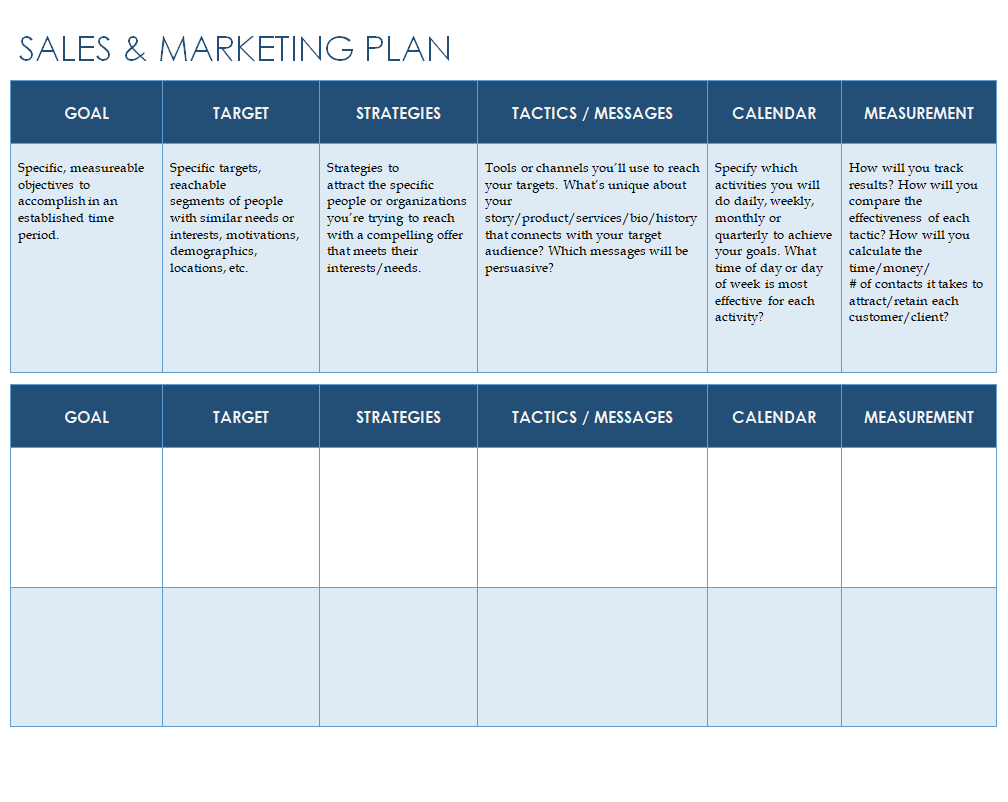
Standard Sales & Marketing Plan Template
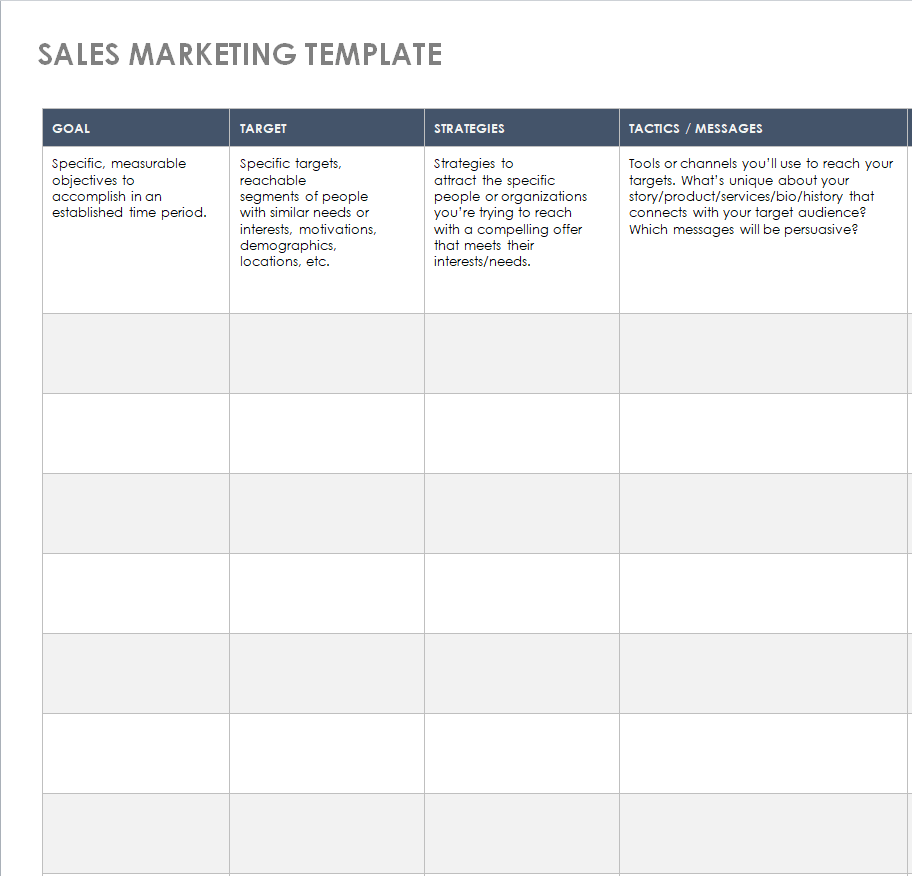
Editable Sales Marketing Plan Template
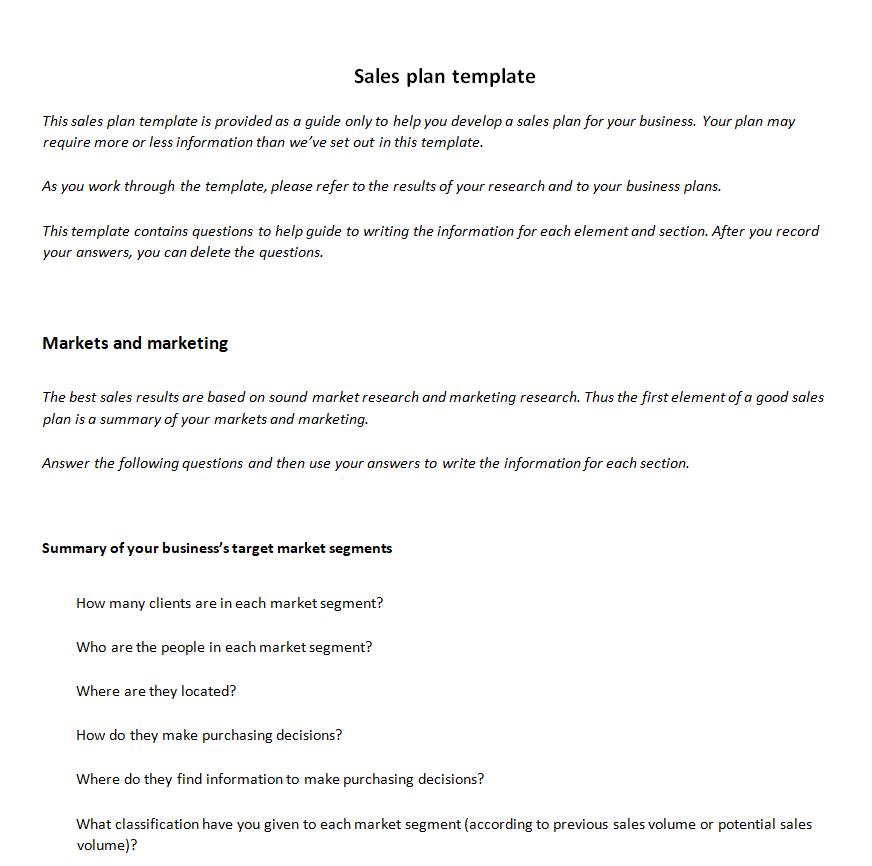
Simple Sales Plan Template Word
Company’s Sales Plan Doc Template
Corporate Sales Plan Format Template
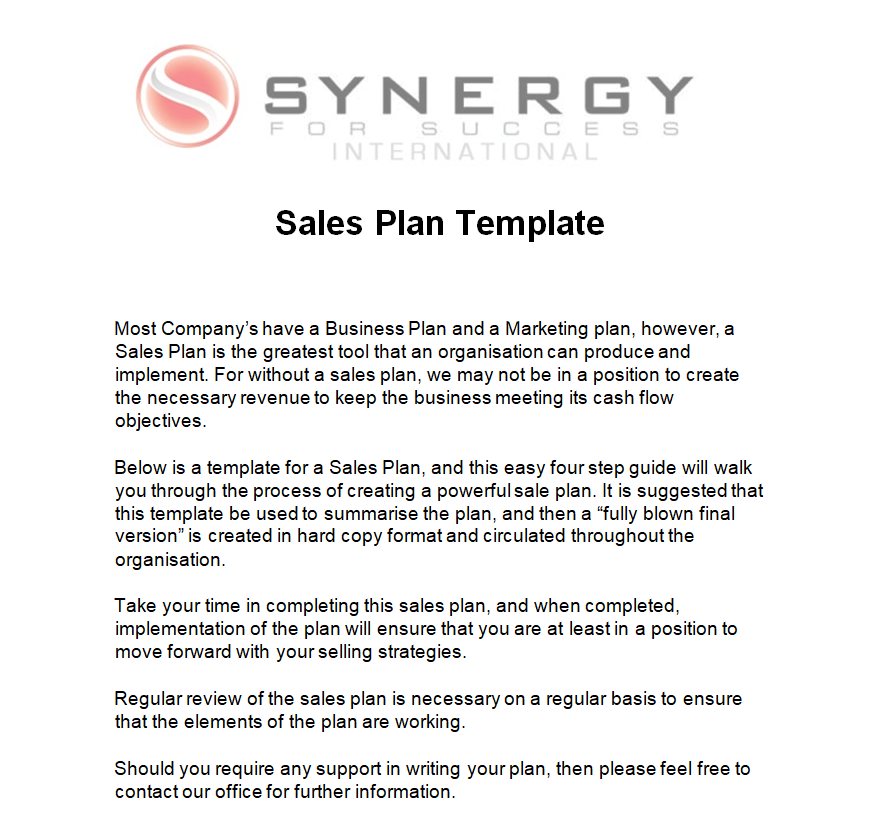
Detailed Sales Plan Sample Doc
Basic Business Sales Plan Template
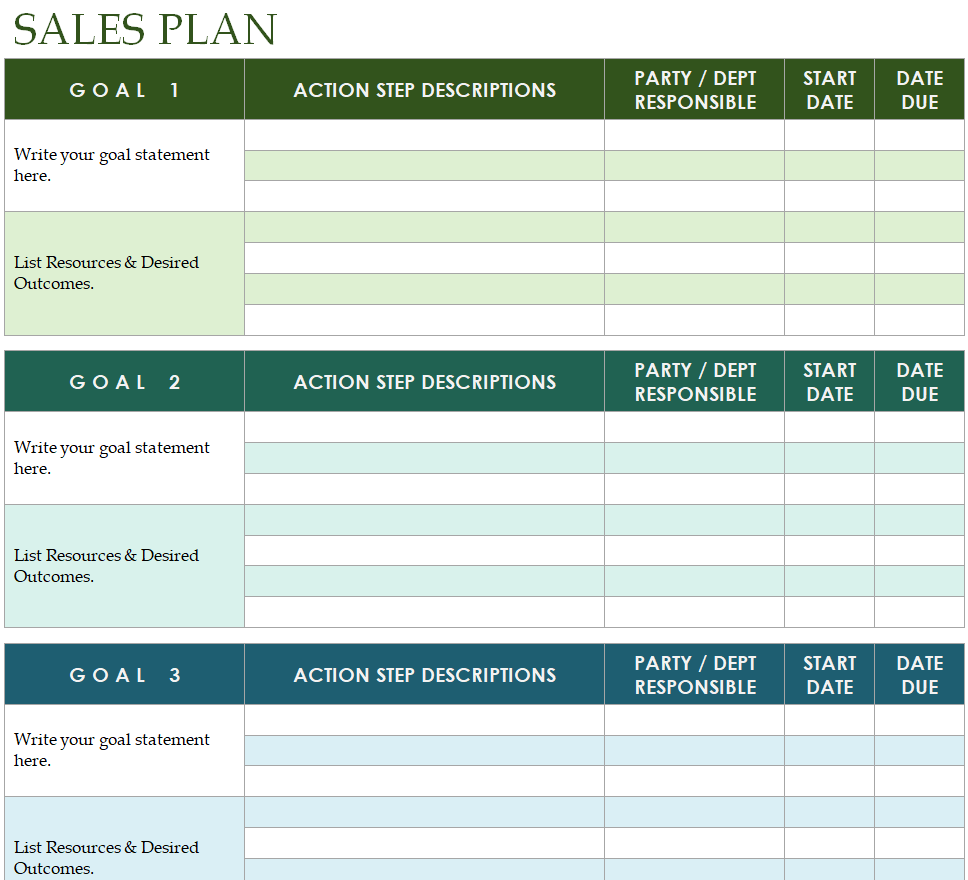
Fillable Sales Action Plan Word Template
Company’s Sales Plan Example MS WORD
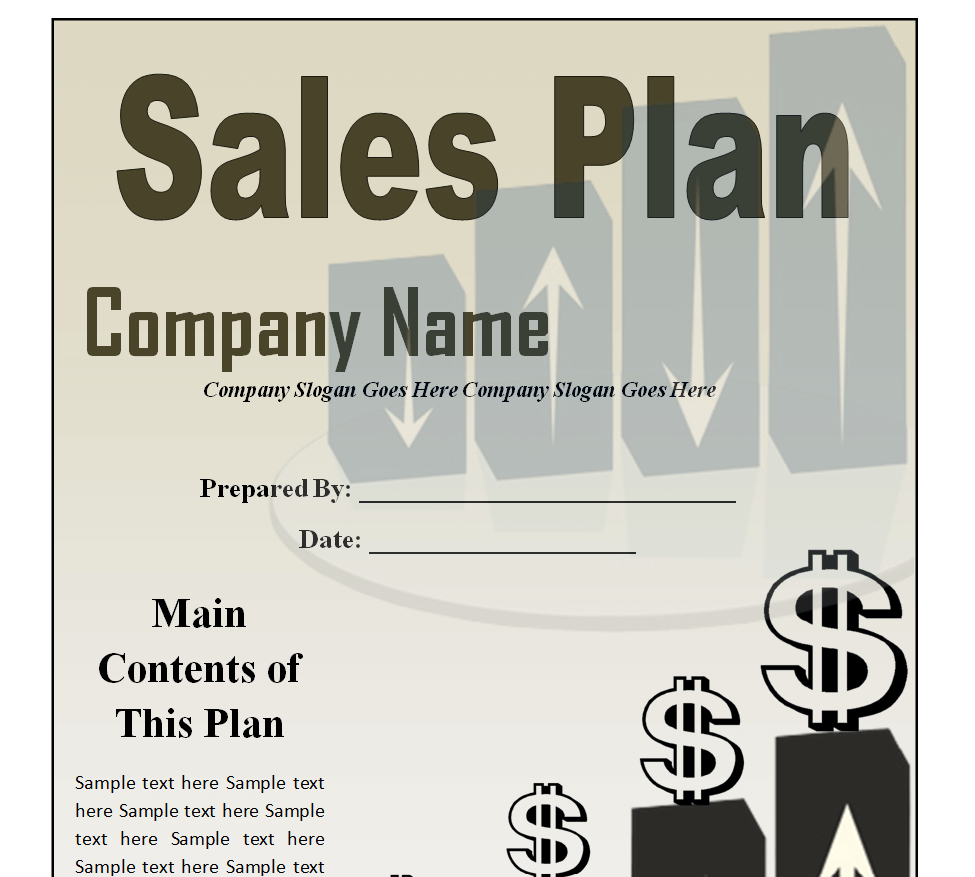
Blank Sales Action Plan Word Template
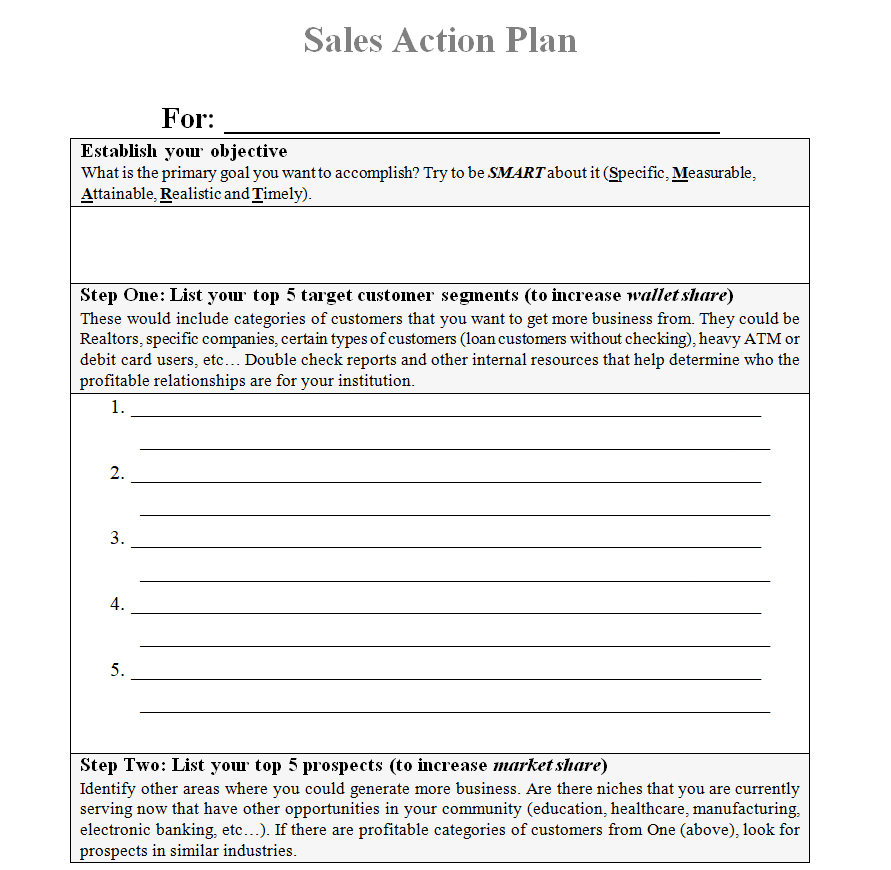
Work Backward From the Number
The most useful exercise in sales planning takes ten minutes and a calculator. Start with your target and work backward to daily activity. Say you want $240,000 in new revenue this year and your average deal is worth $4,000. That’s 60 deals, or 5 a month. If you close about one in four qualified opportunities, you need 20 opportunities a month. If one in five conversations turns into a qualified opportunity, that’s 100 conversations a month, or roughly 5 every working day.
Suddenly an abstract goal becomes something a salesperson can act on before lunch. Put this math into your template, and revisit it each quarter as your real conversion rates come in.
A 30-60-90 Day Approach
New sales manager? Launching a new product or territory? Break the first three months into stages:
- Days 1–30: Learn. Review past deals, interview customers, shadow the team, and audit your CRM data. Resist the urge to change everything at once.
- Days 31–60: Build. Refine your ideal customer profile, set up a consistent pipeline process, and test one or two new outreach ideas.
- Days 61–90: Scale. Roll out what’s working, set quarterly targets with the team, and lock in a weekly review rhythm.
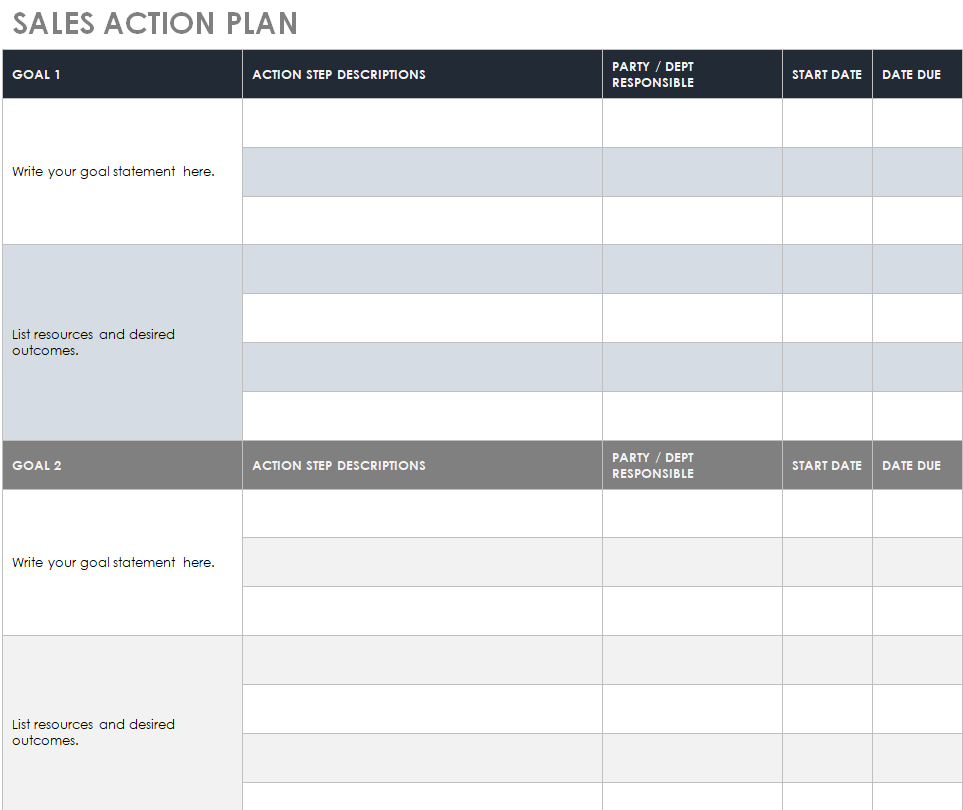
The fillable sales action plan template works nicely for this, since it already has columns for task, owner and deadline.
Metrics Worth Tracking
| Metric | What it tells you |
|---|---|
| Revenue vs. target | Are we on track this month and quarter? |
| Pipeline value | Is there enough in the funnel to hit future targets? |
| Win rate | How many opportunities turn into customers |
| Average deal size | Whether we’re selling bigger or smaller packages over time |
| Sales cycle length | How long deals take from first contact to signature |
| Activity numbers | Calls, meetings and proposals: the leading indicators |
| Customer retention | Whether existing customers stay and buy again |
Pick four or five to start. A dashboard with twenty numbers usually means nobody looks at any of them.
Warning Signs Your Plan Needs a Rethink
Plans are guesses, and some guesses turn out wrong. Watch for these signals:
- The pipeline looks full, but deals keep stalling at the same stage.
- Your team hits activity targets but not revenue targets.
- Most new revenue comes from a channel the plan barely mentions.
- Discounts are creeping up to close deals.
- Nobody on the team can say what this quarter’s priority is.
When you see two or more of these, don’t wait for the annual review. Get the team together, look at the numbers and adjust the plan.
Rolling the Plan Out to Your Team
A sales plan that lives in a folder on the manager’s laptop won’t change anything. Share it in a kickoff meeting and walk through the reasoning behind the targets, not just the numbers. Ask each salesperson to translate the plan into their own monthly goals and the activities that will get them there. People commit far more to targets they helped shape.
After that, keep it visible. Review progress in a short weekly meeting focused on the pipeline: what moved forward, what’s stuck and what help is needed. Celebrate wins publicly, and treat misses as information rather than failure. When the plan changes, explain why. Consistency and honesty do more for results than any template ever will.
A Mini Example
Company: Regional office cleaning service. Annual target: 18 new contracts, average $12,000 per year. Ideal customer: Offices of 20–150 staff within 25 miles. Main tactics: Outreach to property managers, referral incentive for current clients, local business association events. Weekly activity: 40 outreach emails, 10 follow-up calls, 2 site walkthroughs. Review: Pipeline meeting every Monday; plan review each quarter.
It fits on a single slide, yet everyone involved knows exactly what to do this week. Notice that it says nothing fancy about strategy; the power is in the specifics.
Sales plans connect to plenty of other paperwork. Keep spending in line with our marketing budget templates, or start with a broader business action plan. When a prospect is ready, send a quotation or full business proposal, and agree on deliverables with a scope of work. Track results each month with a monthly sales report.
Frequently Asked Questions
What’s the difference between a sales plan and a marketing plan?
A marketing plan focuses on attracting attention and generating leads. A sales plan focuses on turning those leads into customers and revenue. The two should share goals and budgets.
How long should a sales plan be?
Small businesses can often fit a plan on two or three pages. Larger teams with multiple products and territories may need ten or more.
How often should I update my sales plan?
Review progress weekly or monthly, and revise the plan itself every quarter or whenever something big changes, such as a new product, a lost major client or a shift in the market.
What is a sales action plan?
It’s the tactical part of a sales plan: a list of specific tasks, owners and deadlines that move you toward your targets.
Do I need a CRM to use a sales plan?
No. A Word plan plus a simple spreadsheet works fine for small teams. As deal volume grows, a CRM makes it easier to track pipeline stages, follow-ups and win rates automatically, but the plan itself stays the same.
Should targets be set top-down or bottom-up?
Ideally both. Leadership sets the overall goal based on business needs, the team builds estimates from their pipelines and capacity, and you meet in the middle with a number everyone believes is achievable.
