
Few animals capture kids’ imaginations quite like the wolf. Howling at the moon, roaming in packs through snowy forests, starring in fairy tales and nature documentaries alike, wolves make a perfect theme for art time, science lessons and rainy-day crafts. These wolf templates give you printable outlines and coloring pages you can use right away, from realistic gray wolves to an arctic wolf, a sitting wolf and even a winged fantasy design.
Below you’ll find nine wolf drawings and coloring pages, along with ideas for using them in the classroom, at home, or as a starting point for your own drawings. We’ll also cover simple wolf facts to pair with the activity and tips for tracing, coloring and crafting.
Ways to Use Wolf Templates
- Coloring pages: a calm, screen-free activity for kids of many ages.
- Drawing practice: trace the outline first, then try drawing the wolf freehand next to it.
- Science and nature lessons: pair a coloring page with a short reading about wolf habitats and packs.
- Story time: color a wolf to go with classic tales, then discuss how real wolves differ from storybook villains.
- Crafts: cut out the shape for masks, puppets, bookmarks, bulletin boards or a forest diorama.
Matching the Template to the Age Group
| Age | Best type of page | Activity idea |
|---|---|---|
| 3 to 5 | Bold, simple outlines with large areas | Color with crayons, then glue on cotton balls for fur |
| 6 to 8 | Medium detail, a clear wolf with a simple background | Color and write three wolf facts underneath |
| 9 to 12 | Detailed or realistic drawings | Shade with colored pencils and practice fur texture |
| Teens and adults | Detailed artwork and fantasy designs | Use as a reference for your own drawing or painting |
Not sure which to choose? Print two different levels and let kids pick. Many children enjoy a challenge when it’s their own choice.
Quick Wolf Facts to Pair With Coloring
A few simple facts turn a coloring page into a mini lesson:
- Wolves usually live and hunt in family groups called packs.
- The gray wolf is the most widespread kind of wolf, and its fur can range from gray and brown to black or white.
- Arctic wolves have thick white coats that help them blend into snowy landscapes.
- Wolves howl to communicate with their pack, for example to find each other or mark their territory.
- Wolves are wild animals and are related to domestic dogs.
About the downloads: These pages and drawings come from coloring websites and artists’ online galleries. Several buttons open the image directly, others open the artist’s page. Coloring pages are generally meant for personal and classroom use; artwork shared by individual artists belongs to them, so don’t resell or republish it, and credit the artist if you share your colored version online.
9 Wolf Templates and Coloring Pages
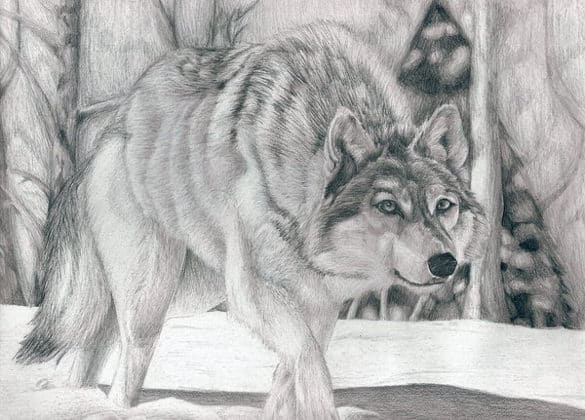

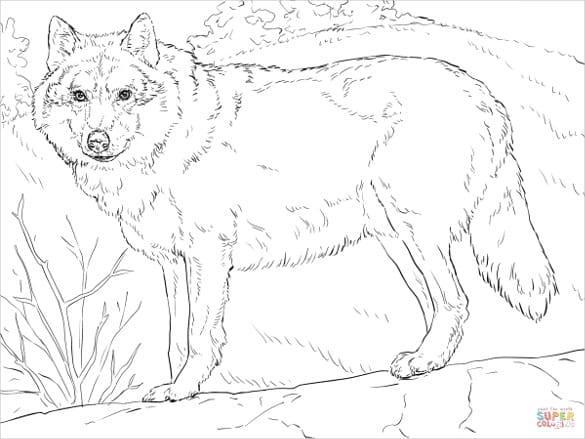
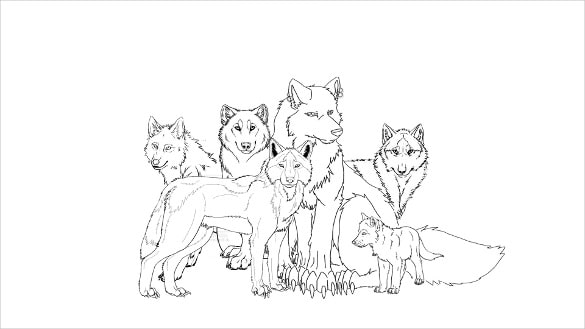
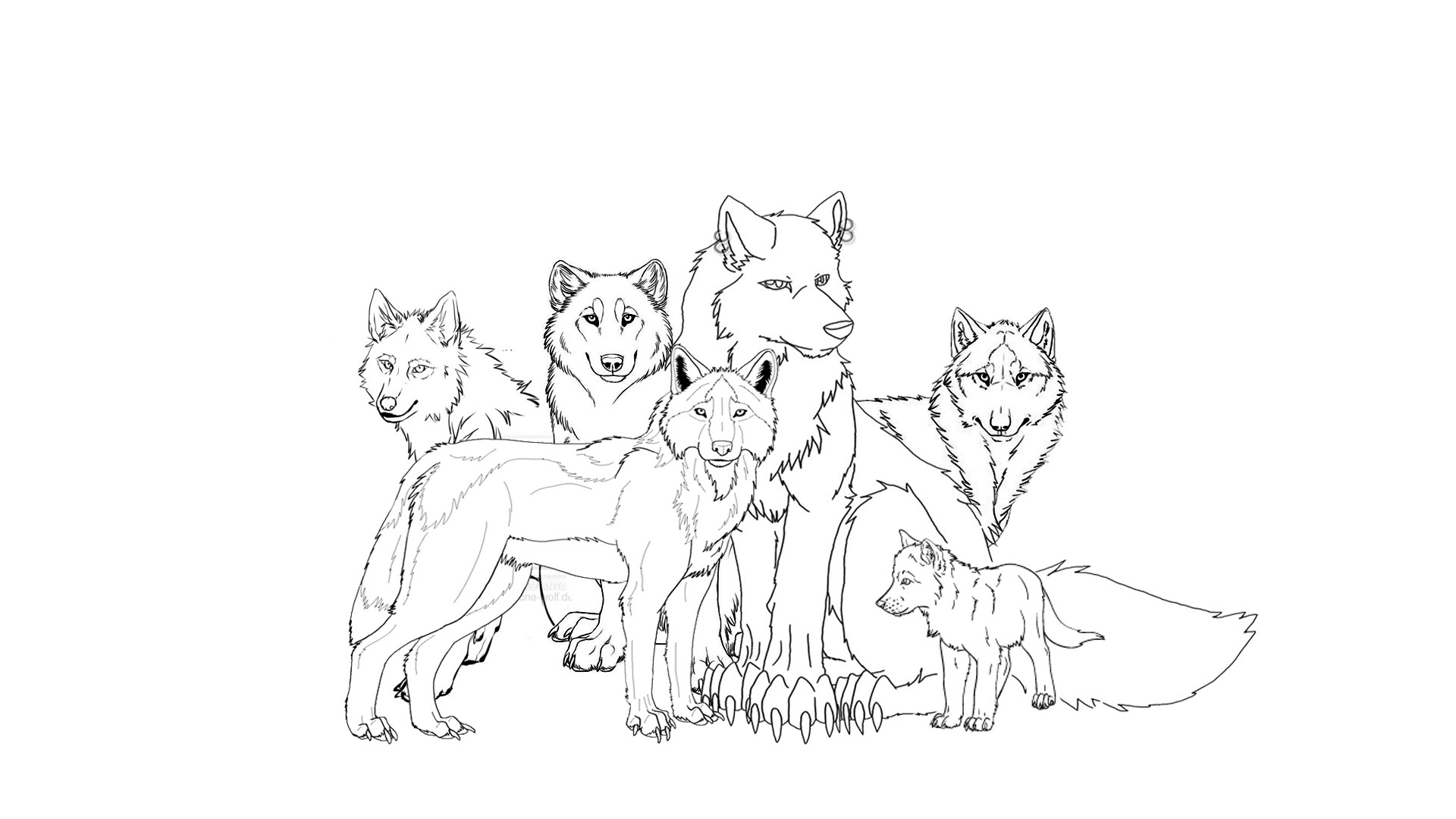
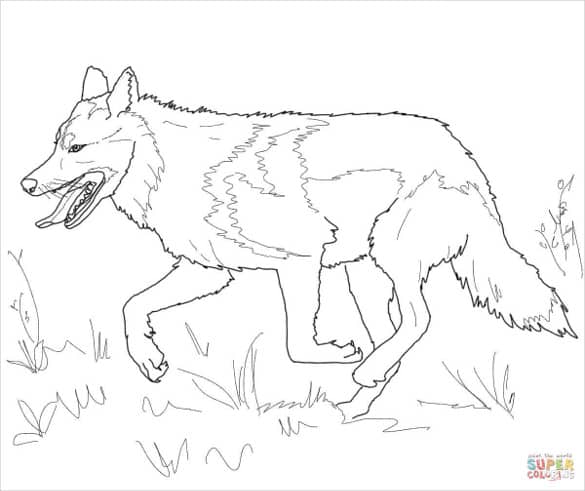
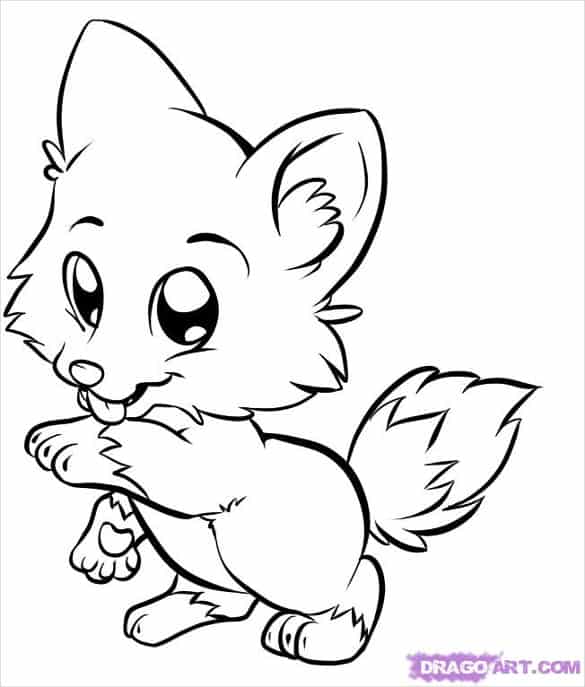
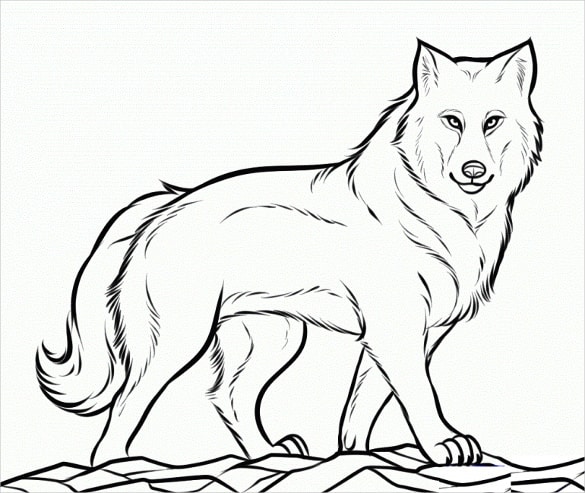
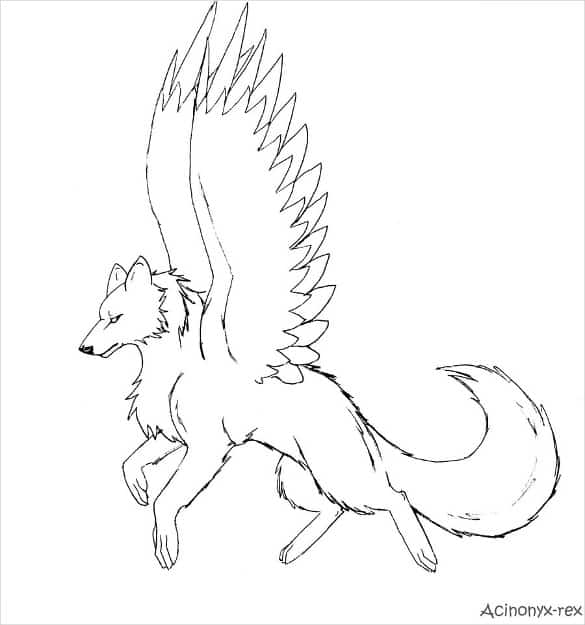
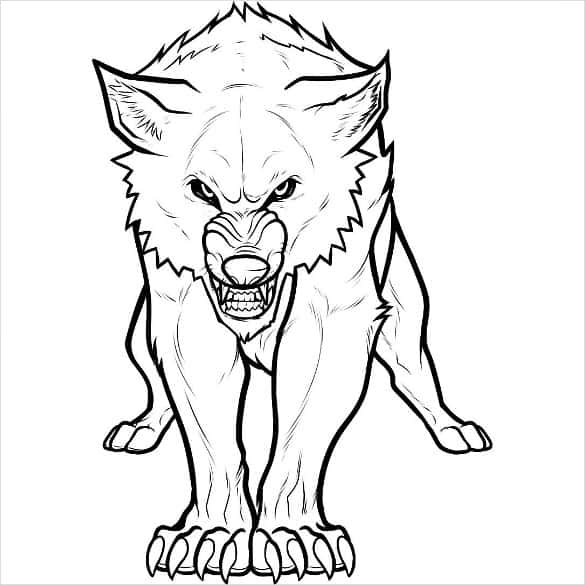
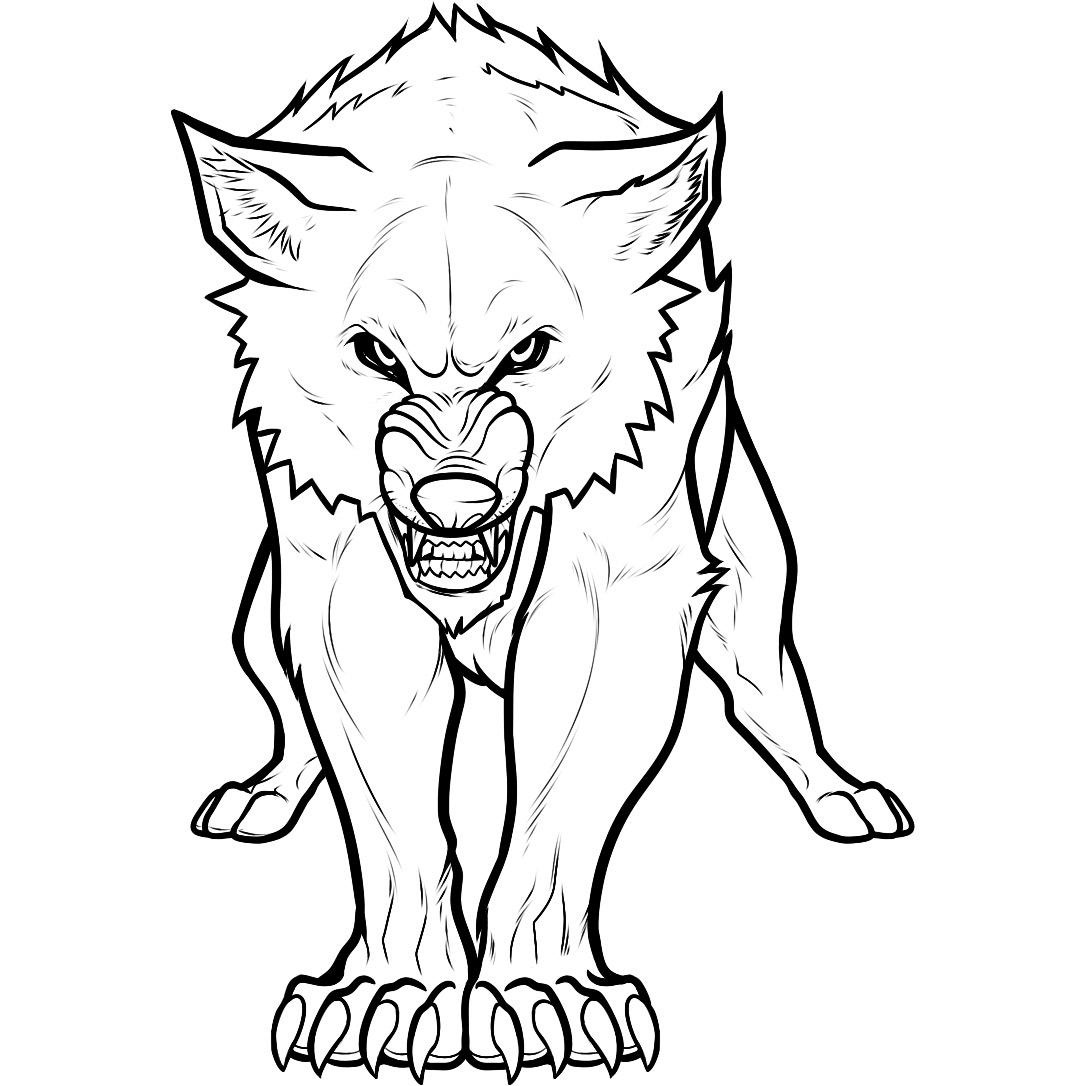
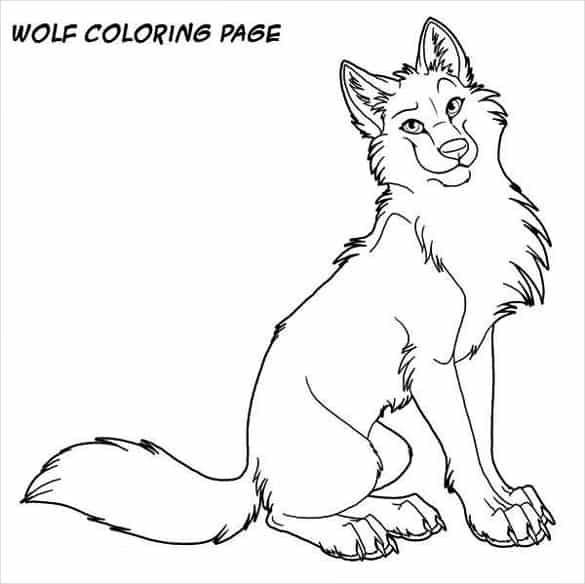

Learn to Draw a Wolf Using a Template
Templates are a great bridge between coloring and freehand drawing. Once kids (or adults) have colored a few pages, try this simple method to draw a wolf from scratch:
- Study the template. Notice the basic shapes: an oval for the body, a circle for the head, a pointed snout, triangle ears and a bushy tail.
- Sketch the shapes lightly. Using a pencil, draw those simple shapes in roughly the same positions as the template.
- Connect the shapes. Join the head to the body with a thick neck and add four legs, slightly longer at the back.
- Refine the outline. Shape the snout, add the ears’ inner lines, and give the tail a fluffy edge with short zigzag strokes.
- Add the face. Almond-shaped eyes, a dark nose at the tip of the snout, and a small curved line for the mouth.
- Erase guidelines and ink. Trace over your final lines with a pen or marker, erase the pencil, and color.
Tracing paper is a helpful middle step: place it over a template, trace the outline, then try again without it. Comparing the traced and freehand versions side by side shows kids exactly where proportions drifted, which is one of the fastest ways to improve. Keep early attempts in a folder so young artists can see how much their drawings improve over a few weeks.
Printing Tips for Crisp Pages
- Print at full size. Choose “fit to page” so the wolf fills the sheet without being cropped.
- Use heavier paper for crafts. Cardstock holds up better for masks, puppets and cut-outs, and it handles markers without bleeding through.
- Save ink on big classes. Black-and-white outlines are all you need. Skip pages with dark filled backgrounds if you’re printing dozens of copies.
- Lighten detailed images. If a realistic drawing prints too dark to color, lower the brightness or contrast slightly before printing.
Coloring Techniques That Make Wolves Look Real
Wolves are rarely one flat color. Encourage older kids to layer shades for a more natural look:
- Start light. Cover the whole body with a pale gray, cream or tan.
- Add darker tones along the back. Many wolves are darker on top and lighter on the belly, chest and legs.
- Draw short strokes for fur. Follow the direction the fur grows instead of coloring in circles.
- Leave highlights. A little uncolored white around the face and chest adds depth.
- Color the eyes last. Yellow, amber or light brown eyes with a tiny white dot bring the drawing to life.
Classroom idea: A second-grade teacher paired the grey wolf and arctic wolf pages for a “compare and contrast” lesson. Students colored both wolves, then listed how each one’s coat helps it survive in its habitat. The finished pages lined a hallway display titled “Wolves Around the World.”
Six Wolf Craft Ideas
- Wolf mask: print the head on cardstock, cut out eye holes, and attach a craft stick or elastic band.
- Paper bag puppet: glue the wolf’s head to the bottom flap of a lunch bag. Our paper bag templates include puppet-friendly shapes too.
- Forest diorama: stand colored wolves in a shoebox scene with paper trees and cotton-ball snow. A few paper house templates can turn it into a village at the edge of the woods.
- Bookmarks: shrink a wolf design and mount it on a strip of card. These bookmark templates give you ready-sized layouts.
- Howling moon night scene: color the wolf, cut it out and glue it onto dark blue paper with a big yellow circle moon.
- Animal fact poster: place a colored wolf in the center and surround it with facts about habitat, diet and pack life.
Turn It Into a Learning Unit
For teachers and homeschool families, a wolf theme can stretch across several subjects. Combine a coloring page with a short reading in science, a pack-life timeline built from our timeline templates for students, and a creative writing prompt such as “A day in the life of a wolf pup.” For a broader animal-and-anatomy lesson, these human body outline templates make a fun comparison: how are a wolf’s senses similar to or different from ours?
Frequently Asked Questions
Are these wolf coloring pages free to print?
Most are shared by coloring websites for free personal and classroom use. Artwork from individual artists belongs to them, so avoid reselling or republishing it.
What age are these templates for?
There’s something for everyone, from simple outlines for preschoolers to detailed drawings older kids and adults will enjoy.
Can I use these templates for a school project poster?
Yes, printing and coloring a page for a school project is a typical personal or educational use. If you publish it online, credit the original source.
What’s the best paper for coloring with markers?
Use cardstock or heavier printer paper so markers don’t bleed through to the table.
How can I make a wolf template larger?
Use your printer’s poster or tile option to spread one image across several sheets, then tape them together for a giant wolf.
