
Nobody enjoys writing a warning letter, but a clear one is fairer to everyone. It tells the employee exactly what went wrong and what needs to change, and it gives the company a written record if the problem continues. These HR warning letter templates help you strike the right tone: firm, factual and respectful.
There are 22 free templates in MS Word below, covering absence and attendance, unruly behavior, misconduct, job performance, confidential warnings and final warning letters.
Where a Warning Letter Fits
Most companies follow a progressive discipline process. A warning letter is usually not the first step:
- Informal conversation about the issue.
- Verbal warning, noted in the employee’s file.
- First written warning describing the problem and expected improvement.
- Final written warning stating the consequences of no improvement.
- Further action, such as suspension or termination, according to company policy.
Serious misconduct can skip steps, depending on your policy and local employment law.
HR Warning Letter Templates in Word
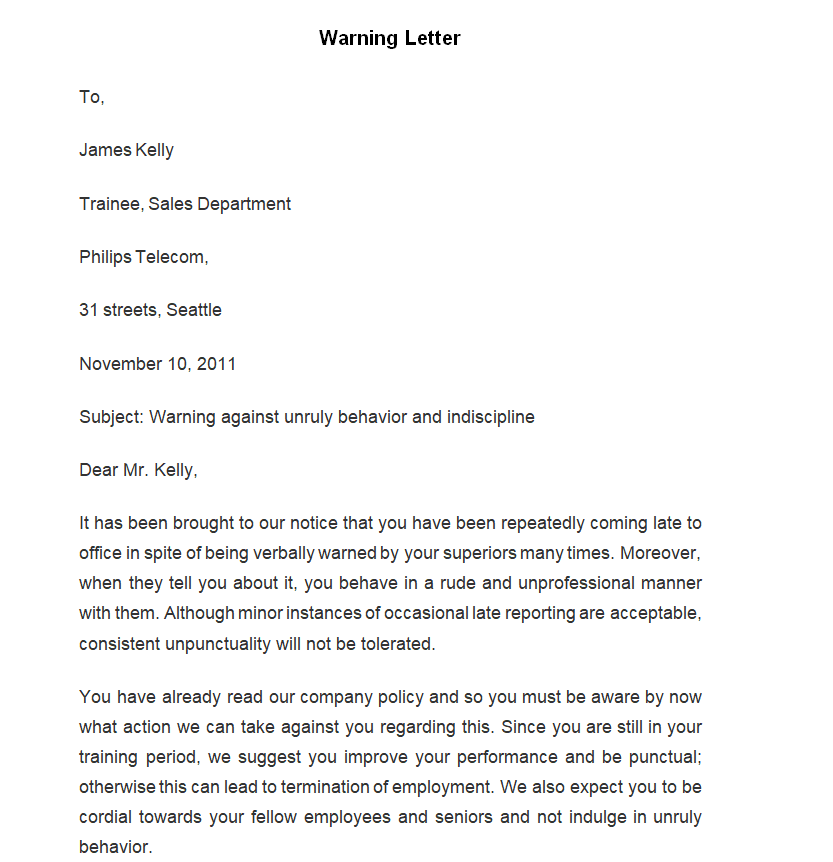
HR Warning Letter Template for Unruly Behavior
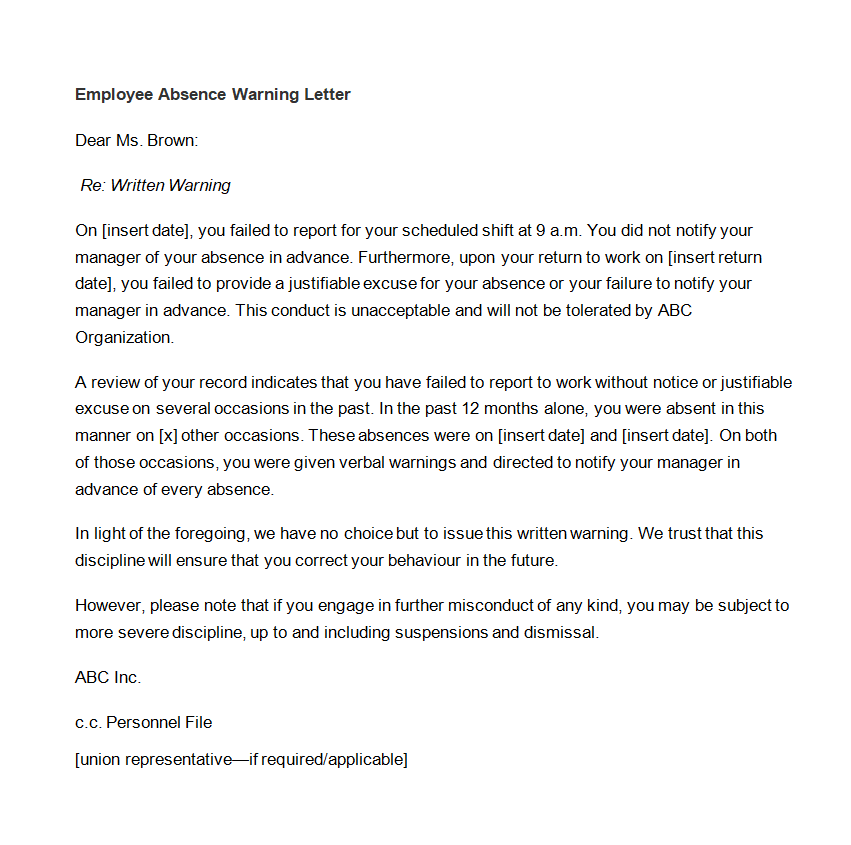
Employee Absence Warning Letter Template
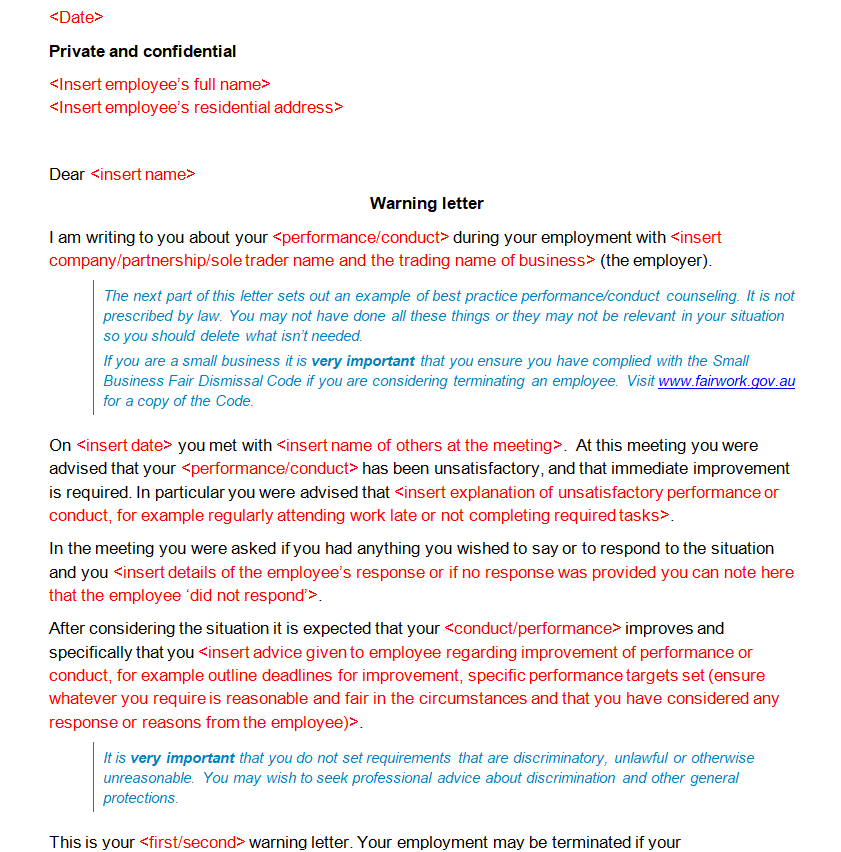
Private and Confidential Warning Letter Example
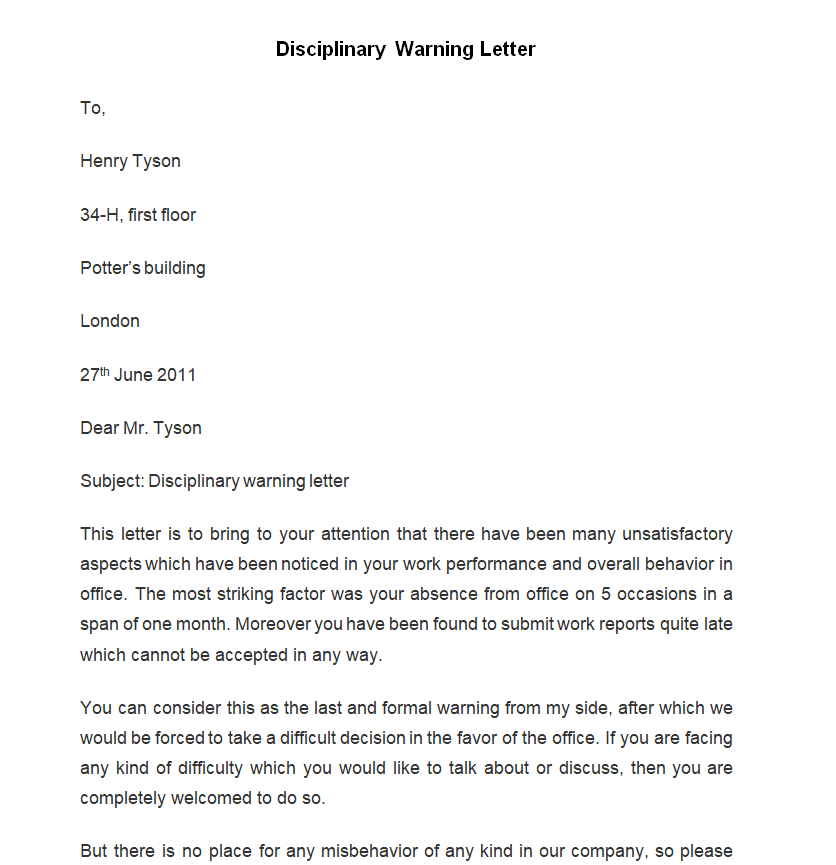
Disciplinary Warning Letter Word Template
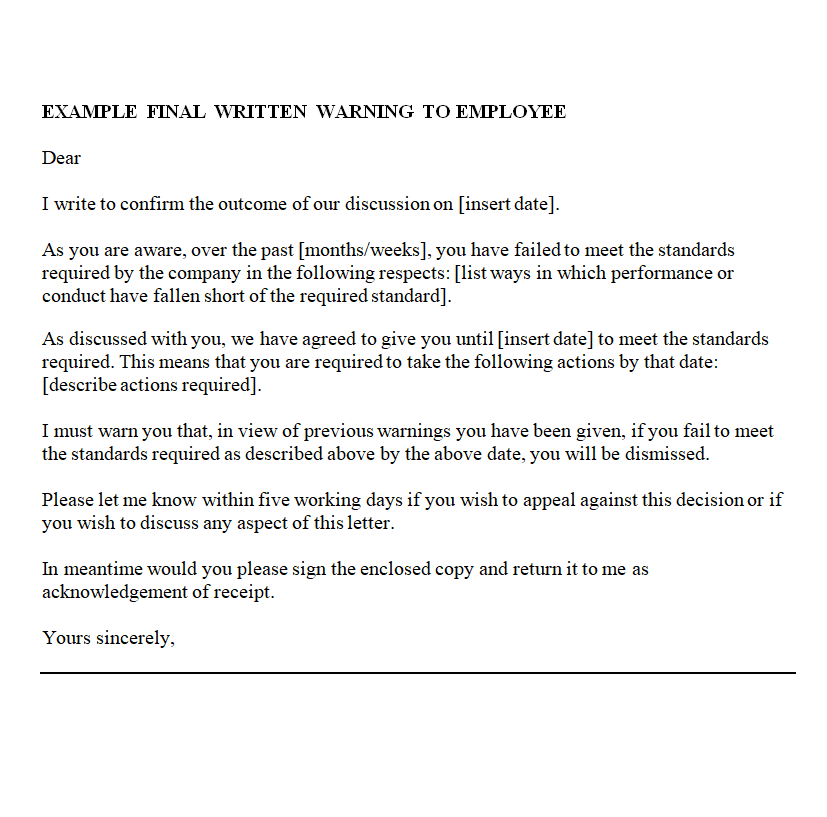
Example Final Warning Letter to Employee by HR
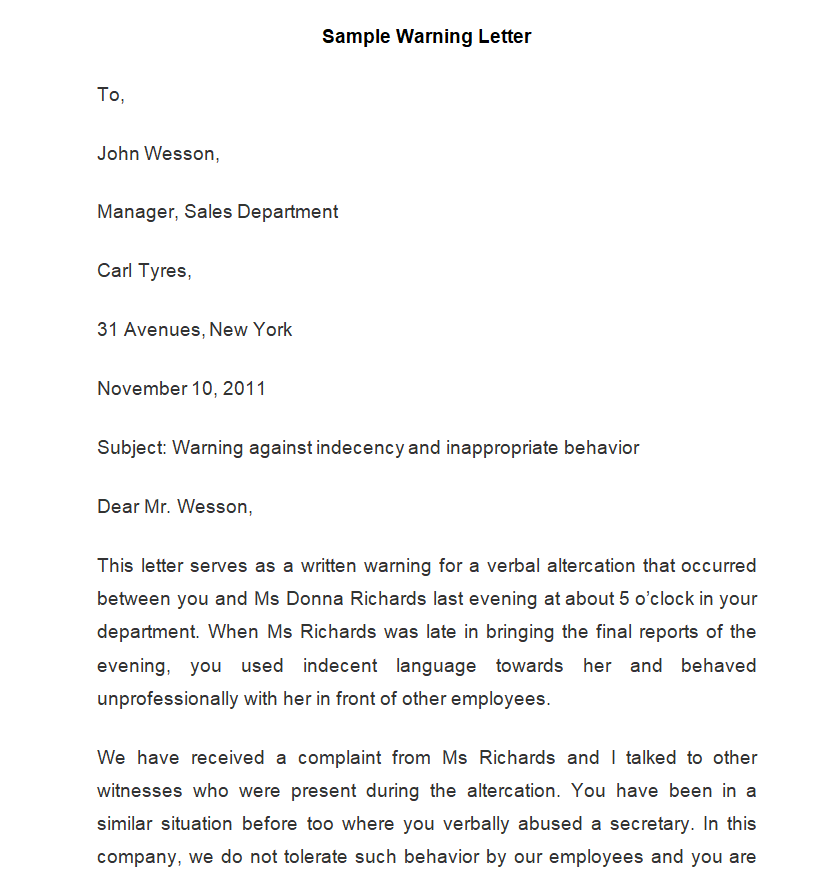
Sample HR Warning Letter Template for Indecency
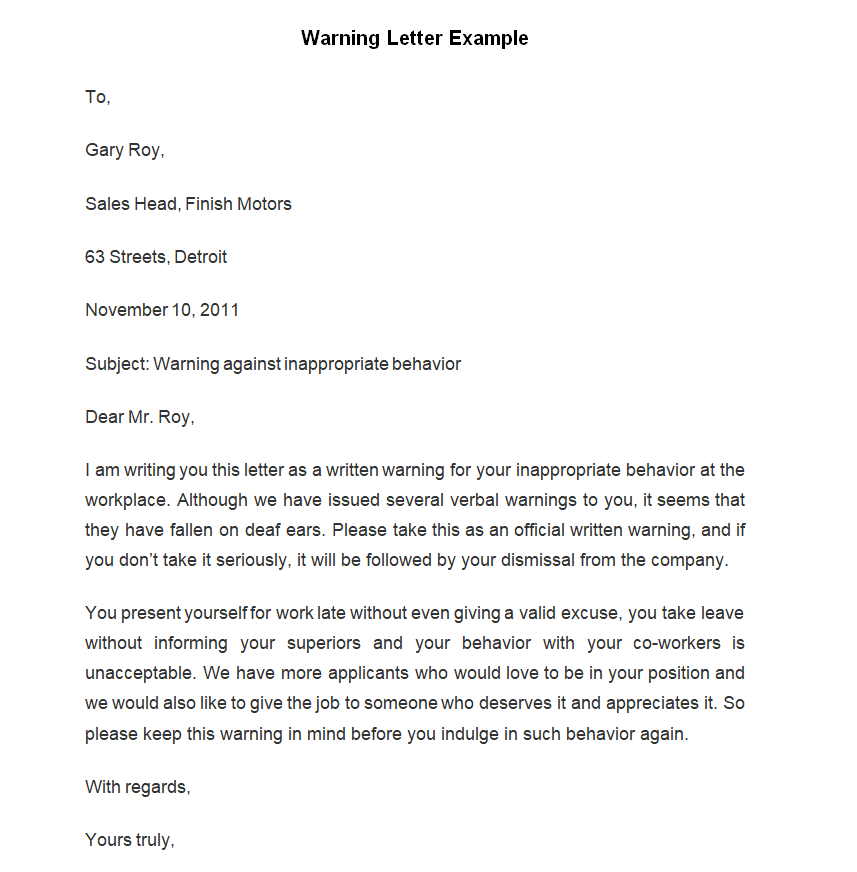
Warning Letter Example in MS WORD
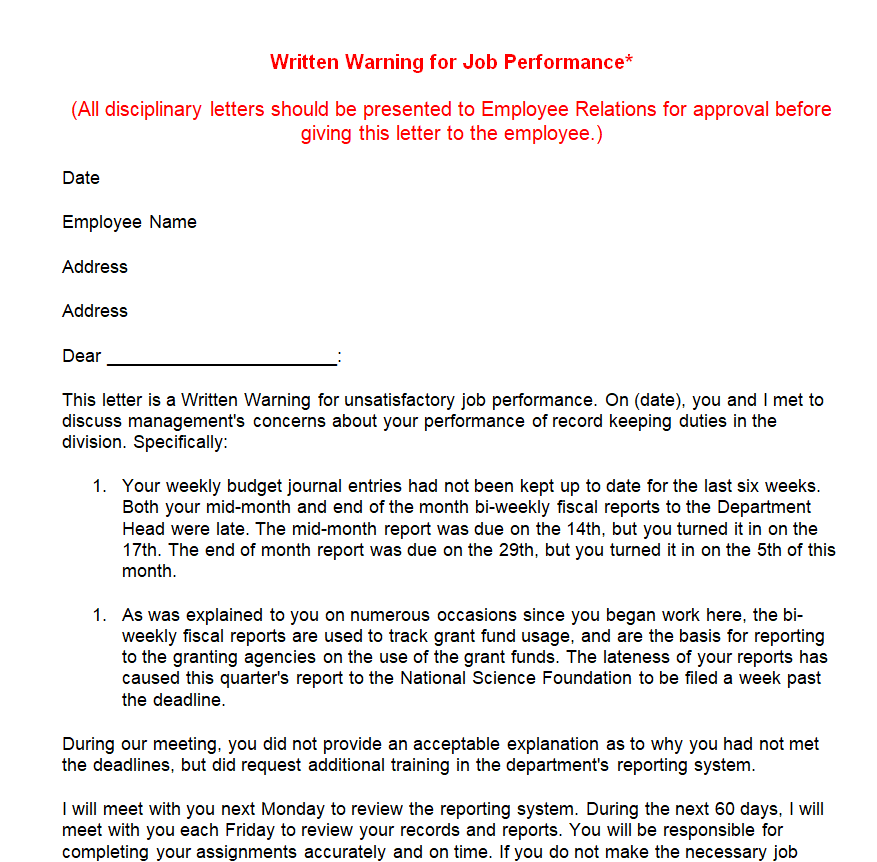
Written Warning Letter by HR for Job Performance
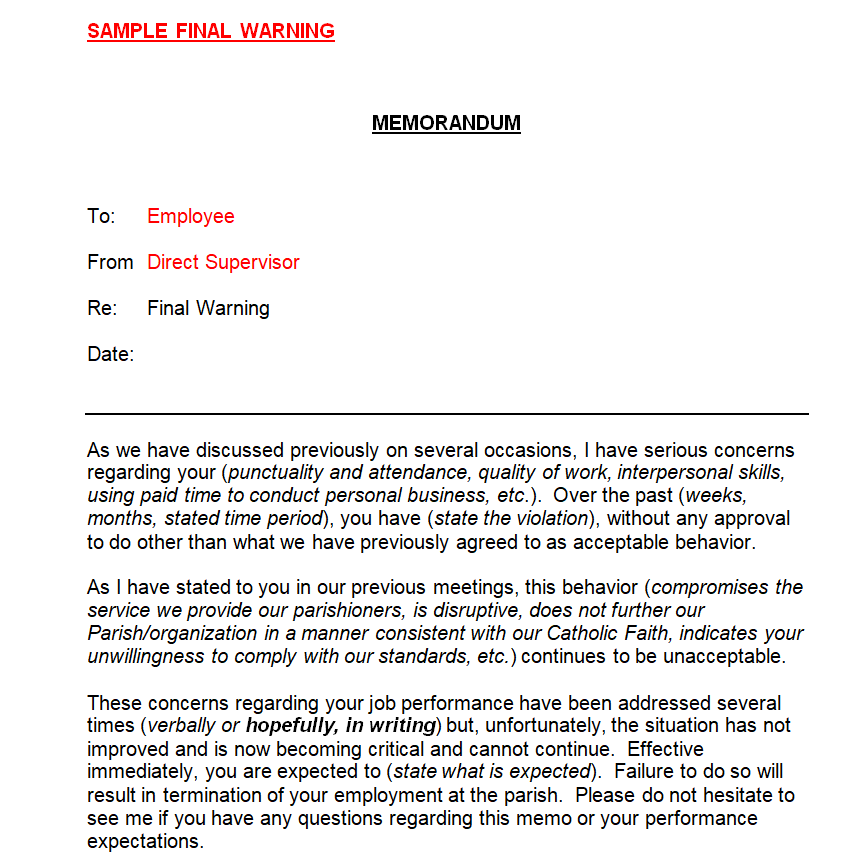
Sample Final Warning Letter Memorandum Template Doc
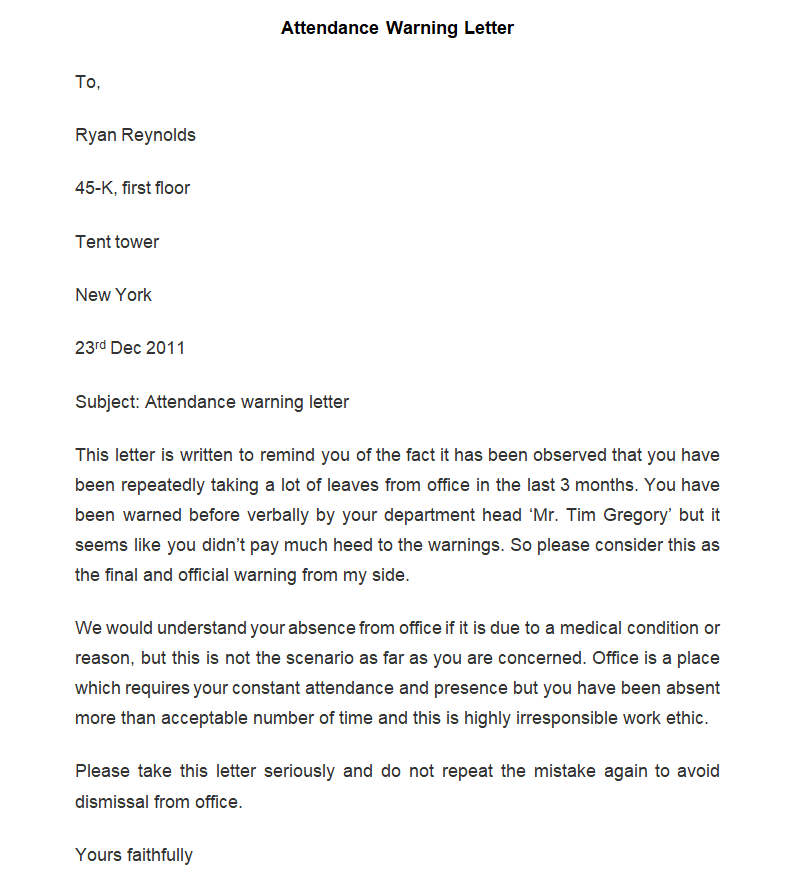
Editable Attendance Warning Letter Sample Doc
Employment Warning Letter by HR Template

Official HR Warning Letter Word Template
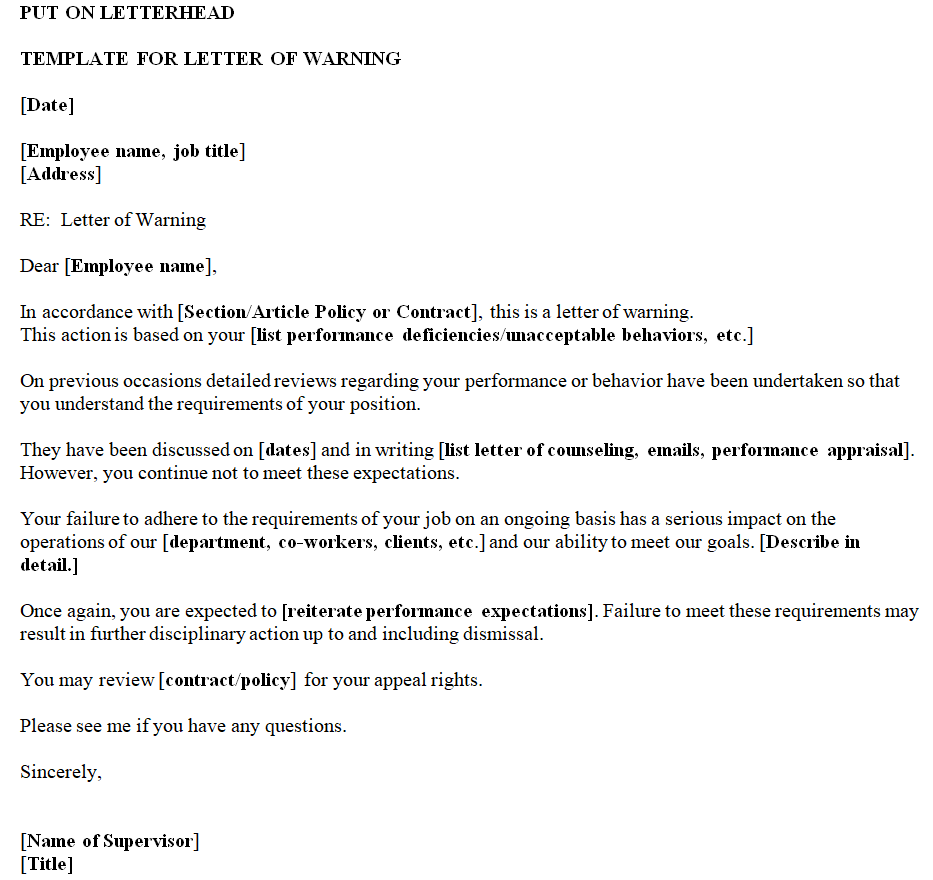
Sample Written HR Warning Letter Format

Company’s HR Warning Letter Template
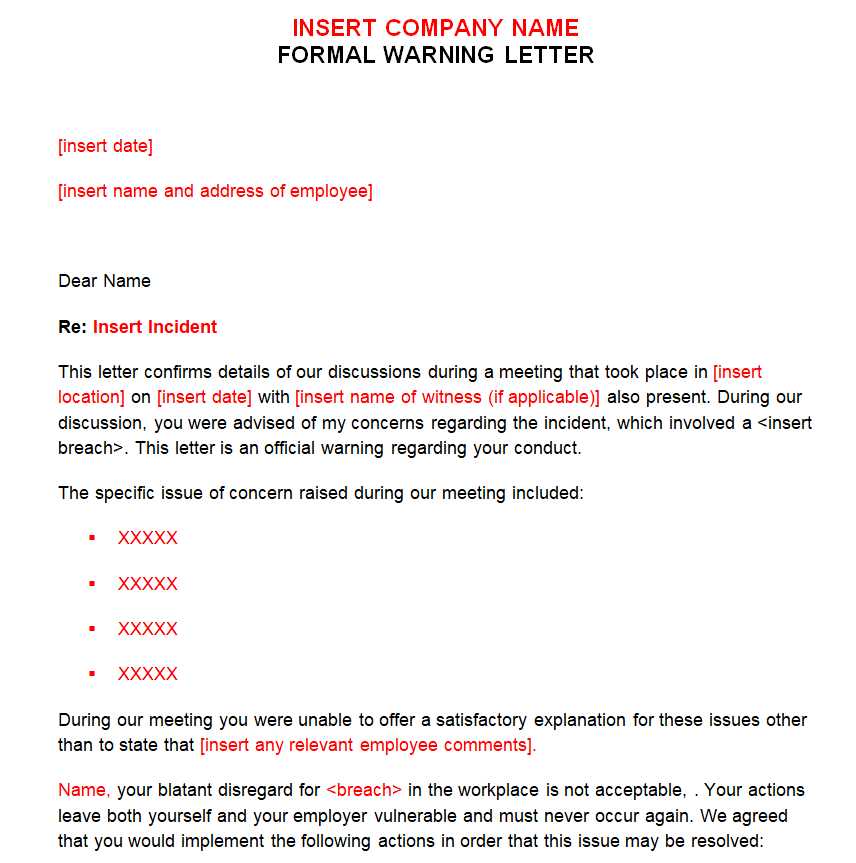
Short HR Warning Letter Format MS WORD
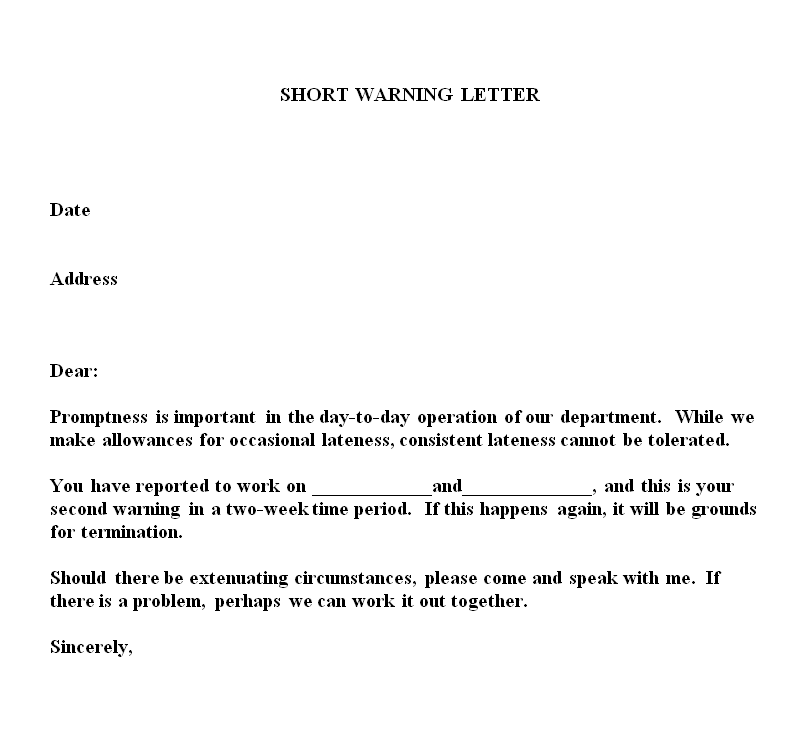
HR Warning Letter Template for Employee Absence
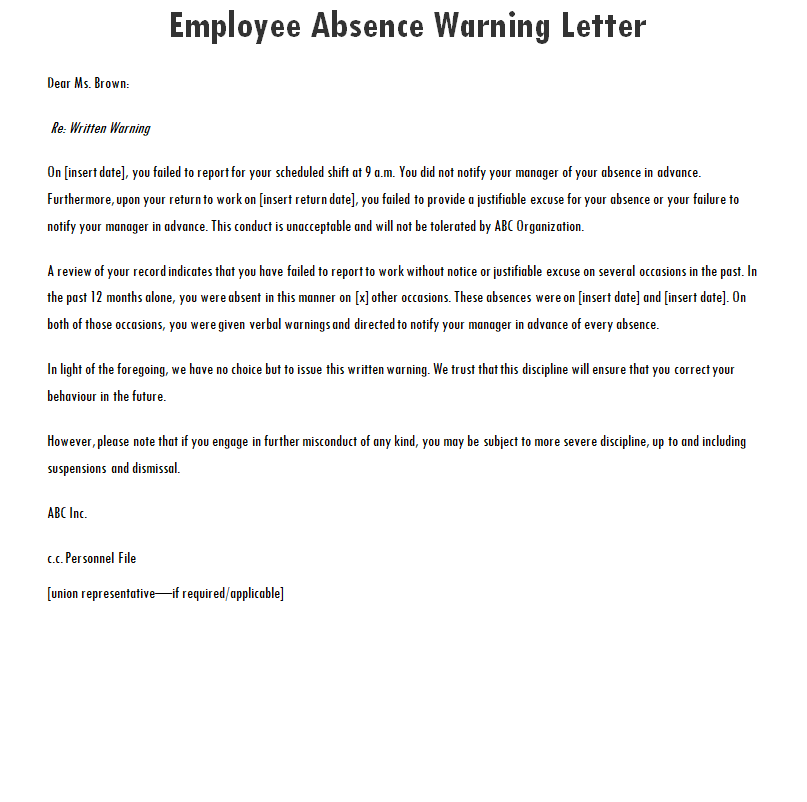
Standard Written Warning by HR Department
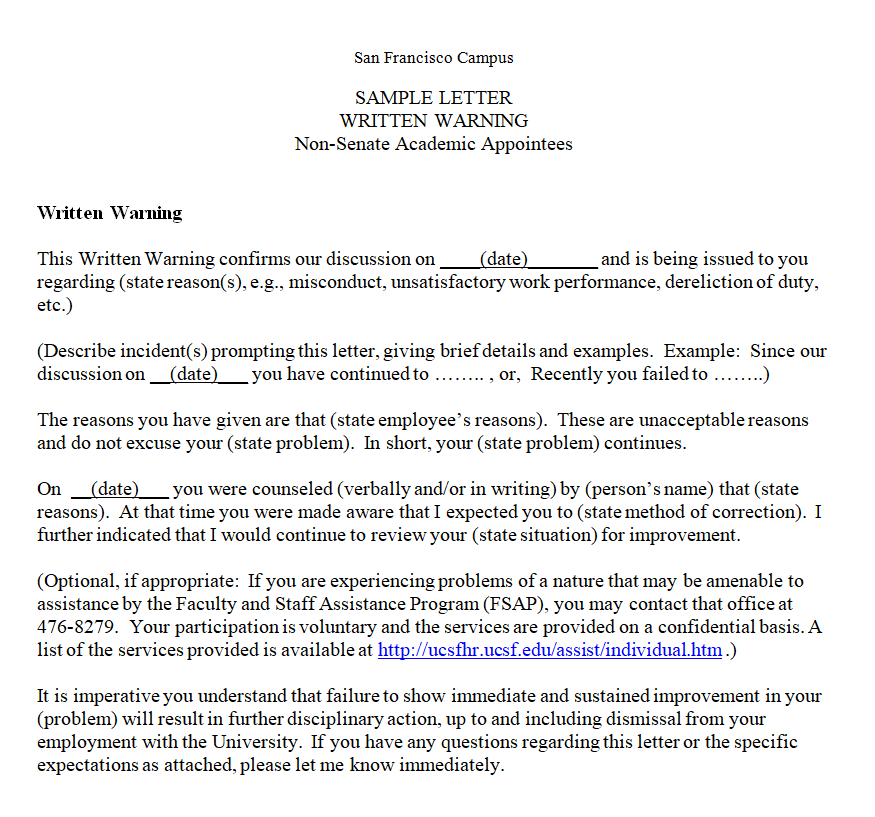
Detailed HR Warning Letter Template for Misconduct
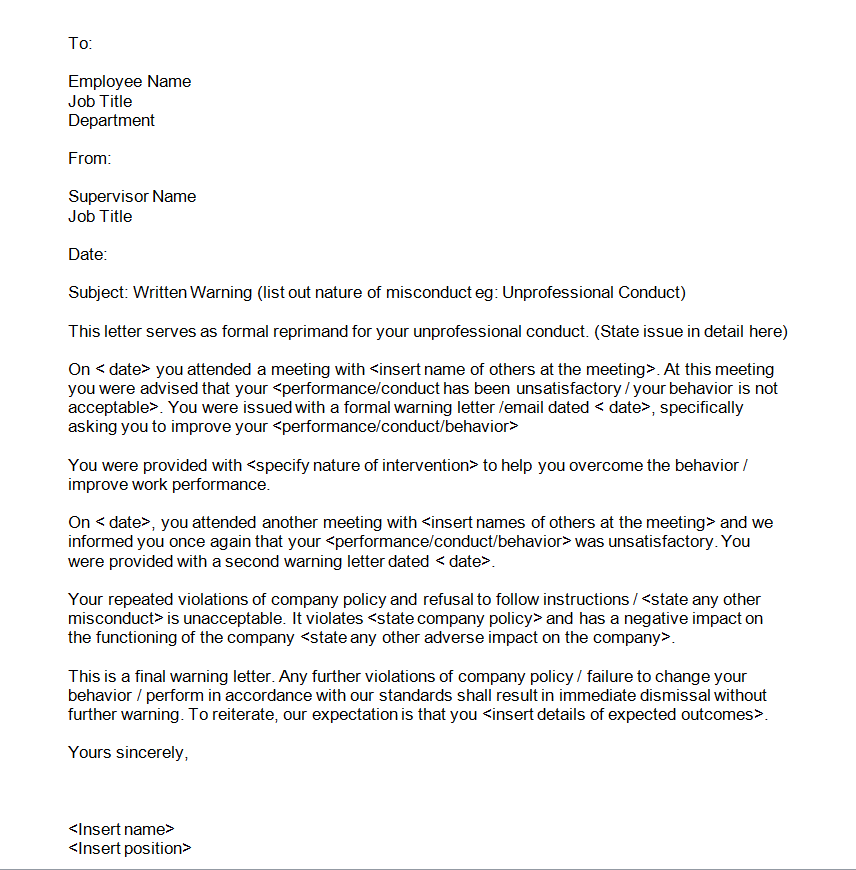
Customizable Disciplinary Warning Letter Template
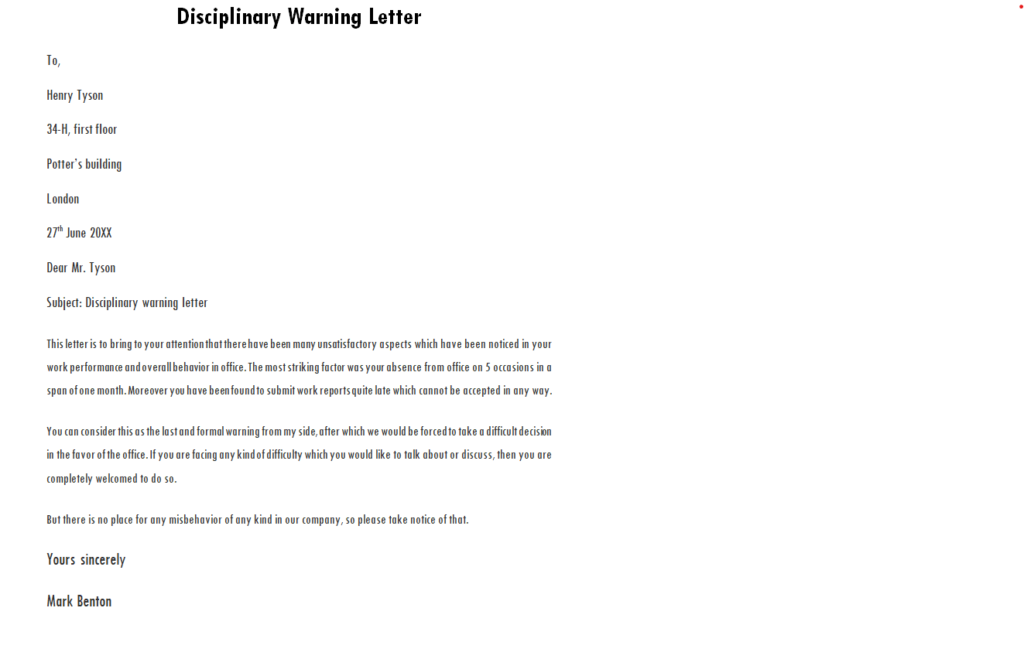
Employee Behavior Warning Letter Template Word

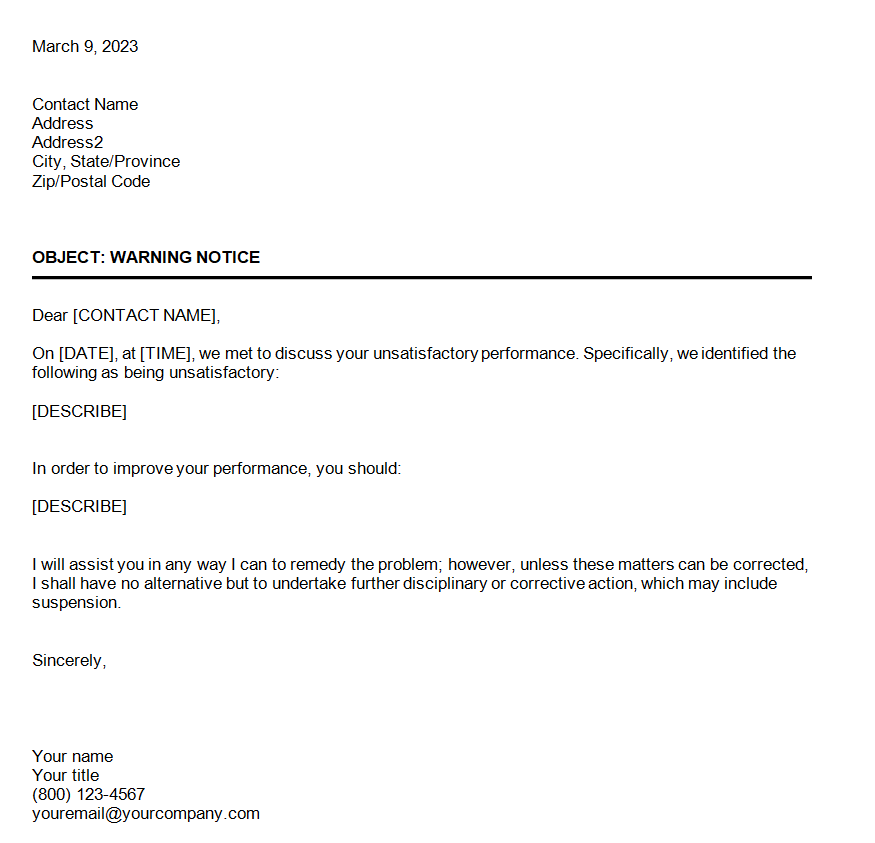
Sample Warning Notice Letter Example
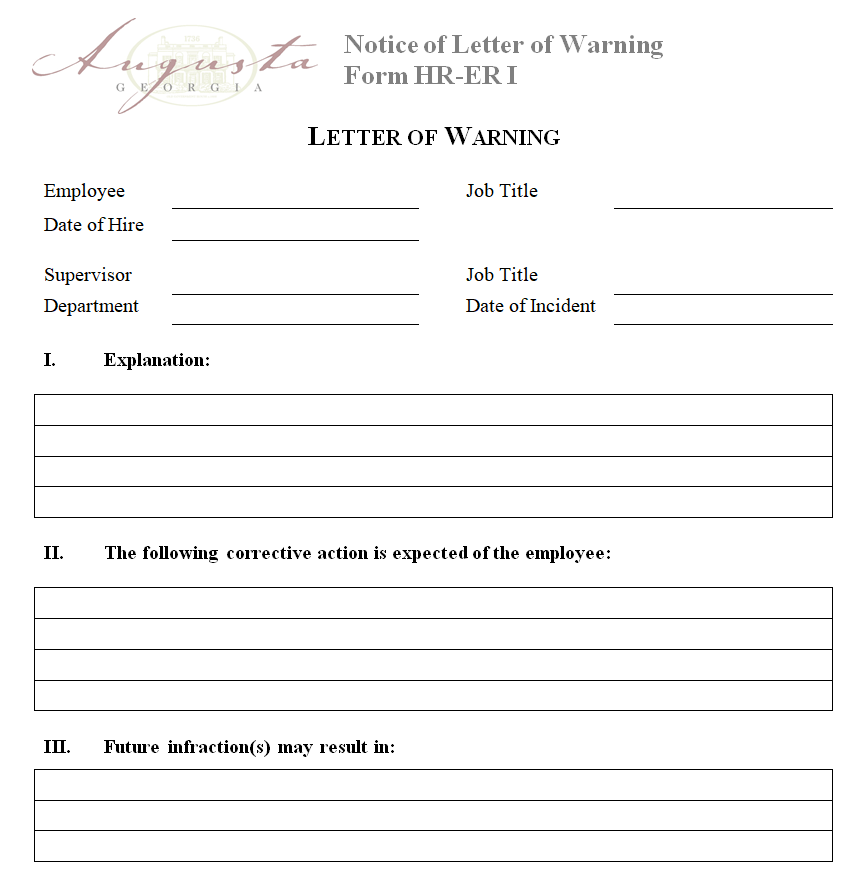
Blank Letter of Warning by HR Template in MS WORD
What Every Warning Letter Should Include
- Date, employee name, job title and department
- A factual description of the issue, with dates and examples
- Reference to the policy or standard that was not met
- Any earlier conversations or warnings
- What improvement is expected, and by when
- Consequences if the issue continues
- Space for the employee’s signature acknowledging receipt, and their comments
Keep it fair: stick to observable facts, avoid emotional language, and give the employee a chance to respond. Rules on discipline differ by country and state, so check your local employment law or HR advisor before issuing a final warning.
Many HR teams start with an employee write-up form to document the incident, then follow with a letter. For attendance issues, a record of approved time off helps separate authorized from unauthorized absences. And when performance improves, recognize it with an appraisal letter.
Frequently Asked Questions
Does an employee have to sign a warning letter?
Signing usually only confirms they received it, not that they agree. If they refuse, note the refusal and have a witness sign.
How long does a warning stay on file?
Company policies vary. Many set a period, such as 6 or 12 months, after which a warning is no longer considered if there are no further issues.
Can I issue a warning by email?
Yes, though a printed letter delivered in a meeting is often clearer. Whatever you choose, keep a copy in the employee’s file.
What’s the difference between a written warning and a final warning?
A written warning sets out the problem and expected change. A final warning makes clear that further issues may lead to serious consequences, such as dismissal.

You must be logged in to post a comment.