

Travel is sold on feelings. Long before anyone compares prices, they picture themselves on a quiet beach, a mountain trail or a busy night market. A good travel flyer captures that moment in a single image and a few well-chosen words, then gives the reader a simple next step: call, visit or book.
The travel flyer templates collected here are designed for tour operators, travel agents, hotels, guesthouses, local tourism boards and anyone organising group trips. They include beach holiday layouts, adventure and hiking designs, city-break flyers and tri-fold style travel guides. Below the gallery you will find advice on writing offers that are clear and honest, choosing photos that sell a destination, and getting printed flyers in front of people who are actually planning a trip.
Why Printed Travel Flyers Still Matter
Most travel research now happens online, but a printed flyer still has a place. It reaches people offline, at moments when they are relaxed and open to ideas: waiting in a café, browsing a community noticeboard or checking into a hotel. A flyer can also be taken home, stuck on a fridge and discussed with a partner or friends, which is exactly how many group trips and family holidays are decided.
For local businesses, flyers are especially useful. A guesthouse can leave a stack of flyers for nearby tours at reception, a tour operator can partner with hotels, and a tourist information centre can promote seasonal events. Each flyer becomes a small, friendly salesperson that works even when your website is not open on anyone’s screen.
Please read before downloading: These designs were made by independent designers and template sites. Four of the original download pages are no longer available, so those links have been removed. Some of the remaining links go to inspiration galleries, online design tools or paid template shops rather than a direct free file. Check the licence on each source. If you sell holidays or tours, make sure prices, inclusions and terms on your flyer are accurate and comply with the advertising and consumer protection rules in your country, including any licensing or financial protection requirements for package travel.
Travel Flyer Designs to Download













Choosing Photos That Sell a Destination
The main image does most of the selling on a travel flyer, so give it real thought. Pick a photo that shows the experience, not just the place. A family laughing on a boat says more about a holiday than an empty harbour, and a hiker looking out over a valley tells a stronger story than a mountain on its own. If you are promoting a specific hotel or tour, use your own photos wherever possible so customers see exactly what they will get.
Light and colour matter too. Golden-hour shots, clear blue water and lush greenery all trigger that “I want to be there” response. However, avoid heavy filters that make a destination look very different from reality. Disappointed customers leave reviews, and honest, attractive photos build trust far better than over-edited ones.
If you use stock images, check the licence allows commercial print use, and make sure the photo actually shows the destination you are advertising. Using a generic tropical beach for a specific island can mislead customers and may break advertising rules.
Writing a Clear, Honest Offer
Travel flyers often fail by trying to say too much. Focus on one trip, package or theme per flyer, and structure the text so a reader can scan it quickly:
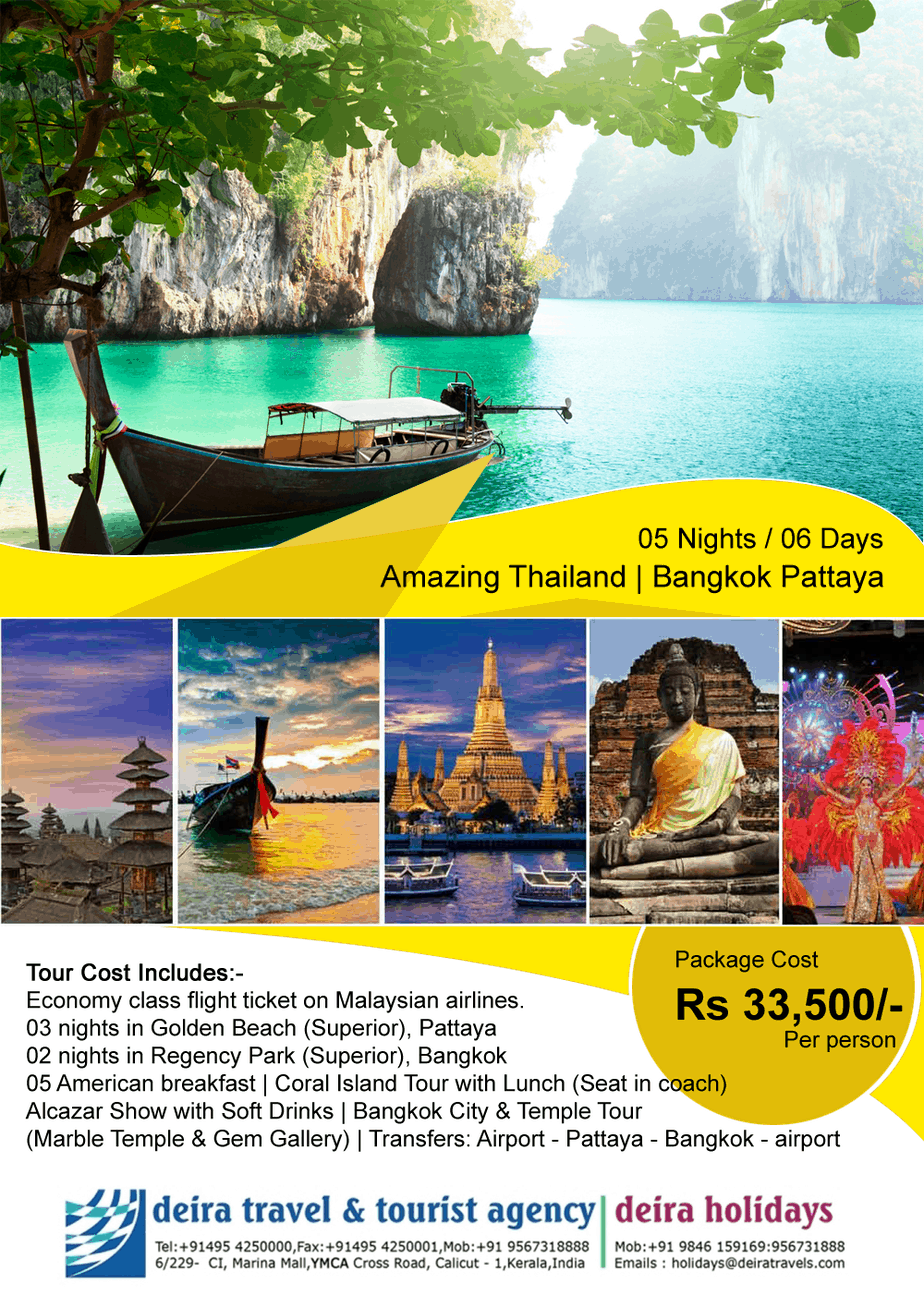
- Headline: the destination or experience, such as “Seven Nights in the Greek Islands” or “Guided Coastal Walking Weekend”.
- Key highlights: three or four bullet points covering what is included, such as flights, accommodation, meals, guides or transfers.
- Dates and price: state clearly whether the price is per person or per room, and mention any important conditions such as “based on two sharing”.
- Call to action: how to book or find out more, with a phone number, website and QR code.
- Small print: availability, validity dates and where full terms can be found.
A “from” price is fine as long as some genuine bookings are available at that price. Avoid vague claims like “best price guaranteed” unless you can back them up. Clear, honest offers not only keep you on the right side of advertising rules, they also bring in enquiries from people who are more likely to book.
Design Ideas by Type of Trip
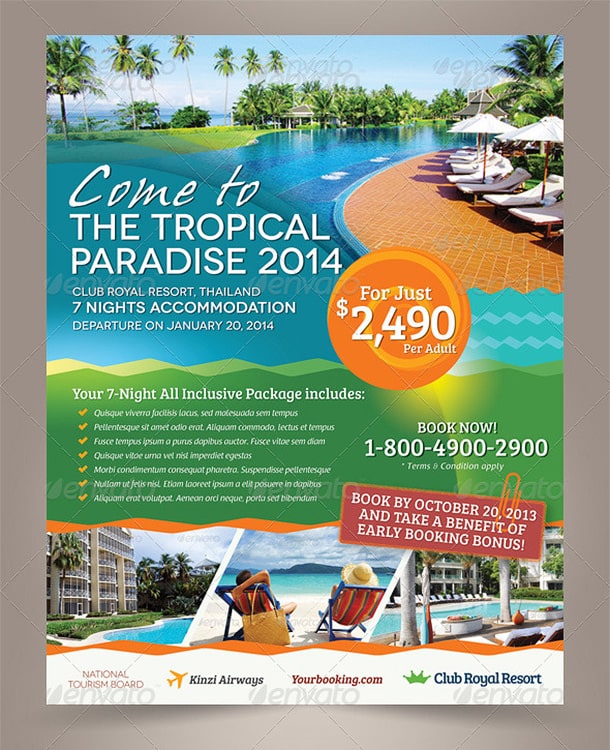
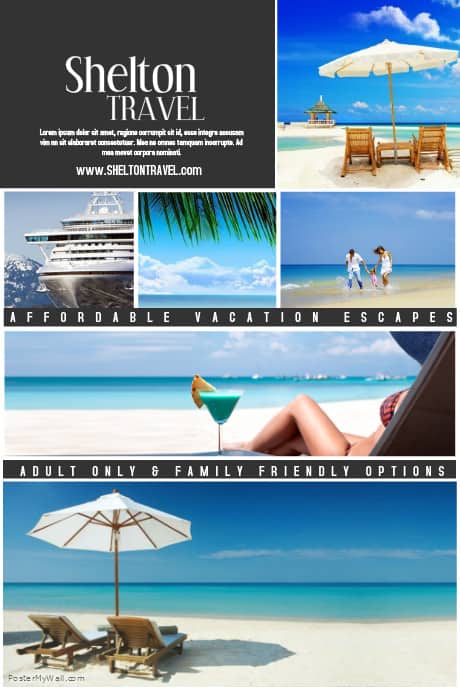
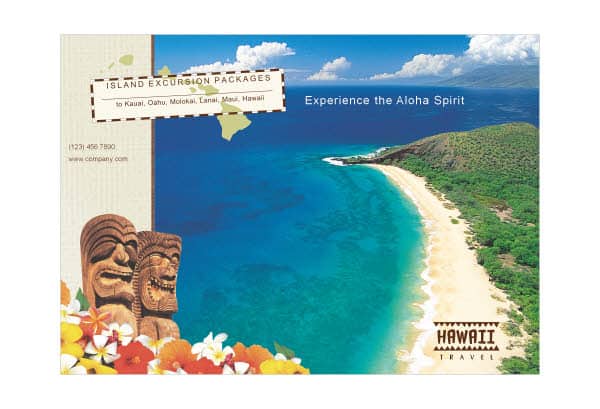
Different kinds of travel call for different visual approaches. Beach and island holidays work best with bright, airy layouts, plenty of turquoise and sand tones, and a single large photo that fills most of the page. Keep the text light and relaxed, because the mood you are selling is rest.
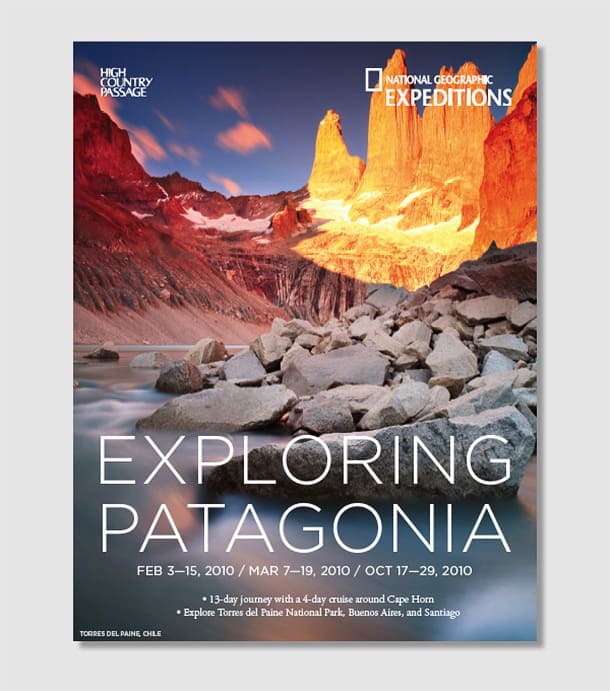
Adventure and outdoor trips suit bolder designs with strong typography, earthy greens and oranges, and action shots of kayaking, climbing or trekking. Include practical details such as fitness level, group size and what equipment is provided, since these questions come up early for adventurous travellers.
City breaks and cultural tours often look best with a clean, magazine-style grid that shows several sights at once: a landmark, a street scene, a local dish. Elegant serif headings and a restrained colour palette give a sophisticated feel that matches museum visits, food tours and theatre trips.
Group and school trips are usually read by organisers and parents, so clarity beats glamour. Lead with dates, costs, what is covered and safety arrangements, and use friendly images of groups enjoying the activity. A tear-off slip or QR code for expressions of interest makes it easy to gauge numbers early.
Local tours and day trips promoted at hotels and visitor centres need to answer one question fast: “Can I do this tomorrow?” Put departure times, meeting points and how to book right at the top, and keep the design simple enough to read from a brochure rack.
Flyer, Leaflet or Brochure?
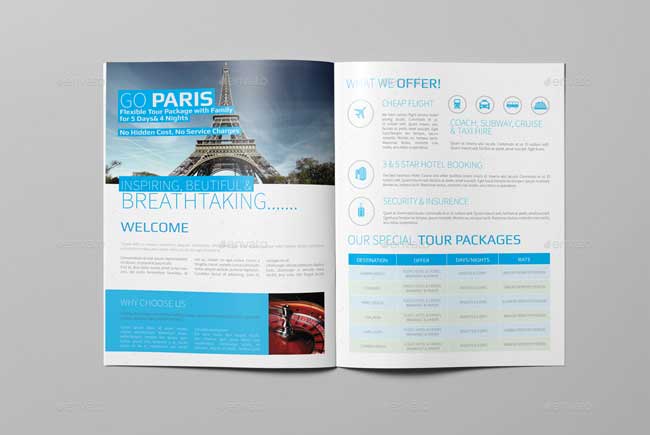
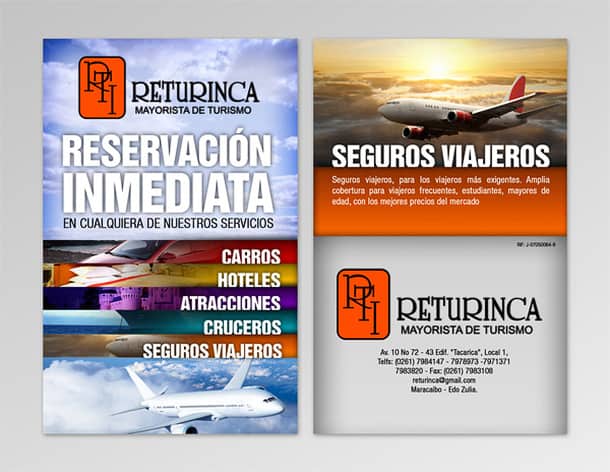
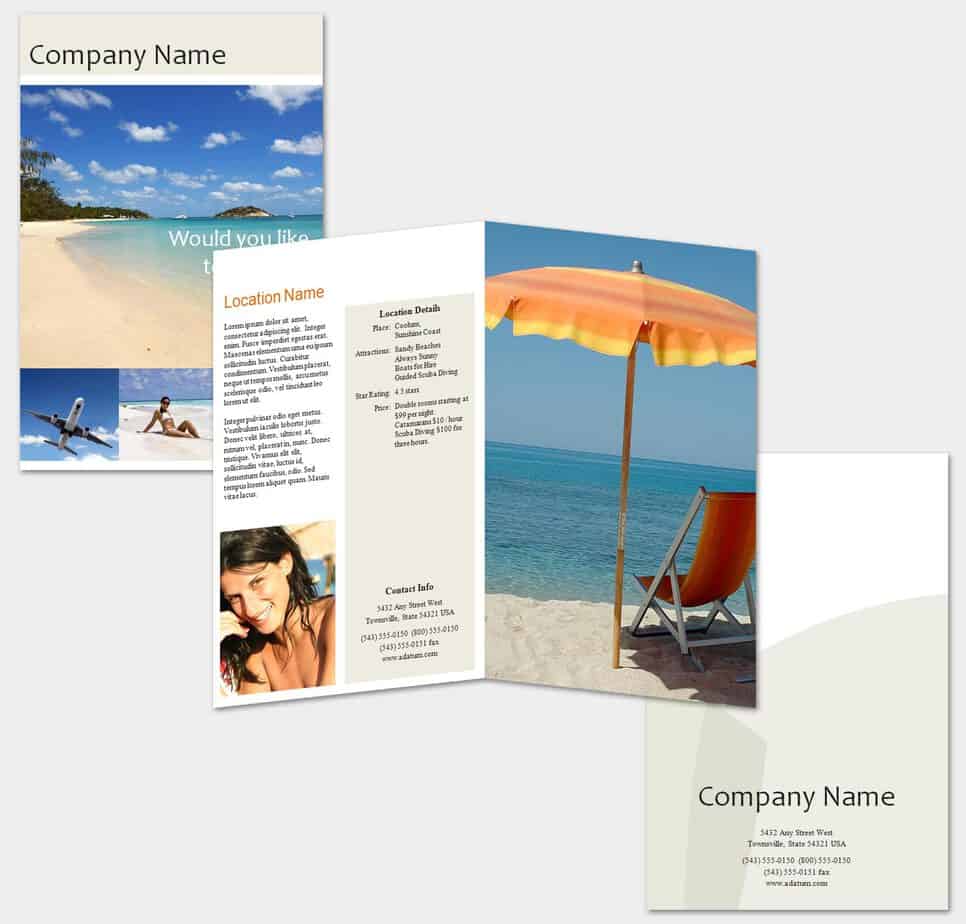
Some of the designs above are single-page flyers, while others are bifold or tri-fold brochures. Single flyers suit one offer, an event or a simple message such as “Day trips every Saturday”. Folded brochures give you room for a full itinerary, several packages or a short guide to a destination, which makes them better for agencies with a wide range of trips. If you need even more space, a printed catalogue can showcase a whole season of holidays, while a short day-by-day plan can be laid out with an itinerary template and handed out once people have booked.
Where to Distribute Travel Flyers
Think about where people plan trips or spend time in a holiday mood. Good spots include hotel and guesthouse receptions, tourist information centres, airports and railway stations where permitted, cafes, gyms, libraries, community centres and local events. For corporate group travel, a direct mail-out to nearby businesses alongside a short company profile can open conversations that a flyer alone would not.
Partnerships often work better than cold distribution. Offer a hotel a small commission or a reciprocal display for its own leaflets, or pair with a local restaurant to promote a combined dinner-and-tour package. Including a code or a printed voucher, similar to our coupon templates, lets you track which locations bring in bookings.
Finally, budget sensibly. Printing, design time and distribution all add up, so plan how many flyers you need and where they will go using a simple marketing budget. Reviewing results after each campaign helps you put more money into the places that work.
Frequently Asked Questions
What should a travel flyer include?
A strong image, a clear headline naming the destination or experience, a few highlights, dates and price information, and contact or booking details. Add a short line about terms and where to find them.
Can I use these templates for a tour company?
Yes, as long as the licence on the source site allows commercial use. Replace all sample photos and text with your own, and check that any fonts used are licensed for business use.
Do I need to show prices on a travel flyer?
Not always, but showing a clear “from” price helps filter enquiries. If you do show prices, make sure they are accurate and available, and state what is included.
What size works best?
A5 flyers are easy to hand out and fit in racks, while A4 works for posters and window displays. Tri-fold DL brochures suit detailed itineraries and multiple packages.
Should I print or share flyers digitally?
Both. Print reaches people offline and can be passed around, while a digital version can be shared by email or on social media. Export a separate version for screens with slightly larger text.

